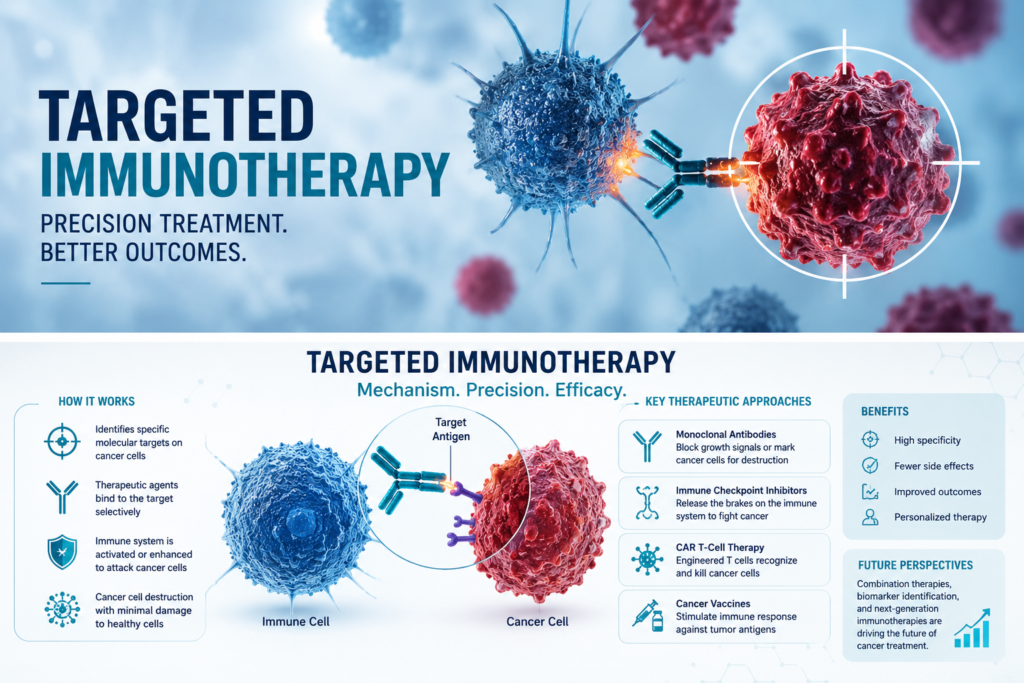
Targeted immunotherapy is considered the primary aim of treatment nowadays, aiming to minimize the side effects of any treatment and focus on treating the disease itself.
1. Introduction:
First, what is targeted immunotherapy?
Nowadays, the main intention of treatment is to reduce side effects as much as possible and direct your attention to treat the disease.
Targeted immunotherapy is not a single treatment, but it apply two separate and powerfull synergistic therapy approaches, targeted therapeutic strategy and immunotherapy. This is a dynamic that relies on the strengths of each, and overcomes their shortcomings to provide synergistic, lasting outcomes for patients that are better than what either approach could achieve in isolation.
Targeted immunotherapy has revolutionized current medicine, improving the specificity of the immune system to clear disease associated cells
Let’s understand more about targted immunotherapy
We need to know how it works and to know more about pharmacodynamics and pharmacokinetics, which greatly affect its efficacy :
2. Pharmacodynamics of targeted immunotherapy:
2.1. Mechanistic Differences:
- Targeted Therapy: This approach directly attacks cancer cells by focusing on specific molecular targets, such as genes, proteins, or components within the tumor microenvironment, that are essential for their growth and survival. Unlike traditional chemotherapy, which affects all rapidly dividing cells, targeted therapy acts on molecular changes unique to cancer cells. Examples include trastuzumab for HER2-positive breast cancer and erlotinib for lung cancer, which directly block growth signals or disrupt cellular processes. This precise mechanism often leads to fewer side effects compared to conventional chemotherapy.
- Immunotherapy: In contrast, immunotherapy does not directly kill cancer cells. Instead, it works by boosting or changing how the body’s immune system recognizes and attacks cancer cells. The goal is to empower the immune system to find and destroy malignant cells more efficiently. This broad category target various therapeutic approaches, including immune checkpoint inhibitors, CAR T-cell therapy, cancer vaccines, cytokines, and immunomodulators.
2.1.1. Fundamental Mechanisms of Action in Targeted Immunotherapy:
1- Antigen selection:
- It is an important step in targeted immunotherapy to ensure the success of the treatment, TO achieve it, we have to consider this point discussed below
1.1. Specificity and Expression Pattern
The goal: Target something present on diseased cells but absent or minimally expressed in healthy cells.
Examples:
- Tumor-Specific Antigens (TSA): Found only in cancer cells as mutated EGFRvIII, HPV E6/E7 proteins.
→ Very safe, low risk of off-target damage. - Tumor-Associated Antigens (TAA): Present in normal tissue, but at much lower levels or only during certain developmental stages as HER2, MUC1.
→ Useful, but require careful dose and safety monitoring.
Pharma perspective: High tumor specificity reduces late-stage clinical trial failures due to toxicity.
1.2. Antigen Accessibility
The goal: To make sure that the therapeutic agent can physically reach and bind the antigen.
Examples:
- For monoclonal antibodies & ADCs → Antigen should be on the cell surface and in an extracellular domain.
- For T-cell–based therapies → Antigen peptides must be presented by MHC I or II on the cell surface.
Why this matters:
If the antigen is hidden inside the cell without MHC presentation, most drugs can’t target it directly (except in cases like peptide vaccines or TCR-based therapies)
1.3. Internalization Potential (for ADCs and some antibodies)
Goal: After binding, the drug–antibody complex should be taken into the cell.
- Some antigens internalize naturally as HER2, CD22.
- Internalization allows ADCs to deliver cytotoxic payloads inside the tumor cell.
Pharma perspective:
Poor internalization → poor payload delivery → wasted drug.
1.4. Stability and Consistency of Expression
The goal: Antigen should be present uniformly across all tumor cells and stable over time.
- Tumors can “lose” antigens under immune pressure (immune escape).
- Heterogeneous expression leads to partial treatment failure, that the main problem faced by immunotherapy
Pharma perspective:
High and stable expression improves clinical response rates and reduces risk of resistance.
1.5. Immunogenicity
The goal: Antigen should trigger a strong immune recognition against the disease, but not trigger a strong immune response against the drug itself.
Examples:
- Neoantigens from tumor mutations are highly immunogenic → great for vaccines and T-cell therapy.
- But drug-induced anti-drug antibodies (ADA) can reduce treatment effectiveness → needs immunogenicity screening.
1.6. Major Histocompatibility Complex (MHC) Presentation and Compatibility
The goal: For T-cell therapies, the antigen must be processed and displayed by the patient’s MHC molecules.
Exaples:
- Use bioinformatics tools (NetMHC, MHCflurry) to predict binding to common HLA types.
- Select antigens that can be recognized by a broad patient population.
1.7. Disease Relevance
The goal: The antigen should play a role in the disease’s biology.
- Oncogenic drivers (HER2, EGFR) → If the tumor stops expressing them, it may also stop growing → less chance of immune escape.
- Non-essential markers → Tumor may shed the antigen to evade therapy.
Ideal target antigens for antibody–drug conjugates (ADCs) should:
- Be highly tumor-specific, with minimal expression by normal cells.
- Be stable and extracellularly accessible to allow effective binding.
- Promote efficient internalization by endocytosis to deliver the payload inside tumor cells.
2. Receptor Binding & Affinity
- Definition: How strongly and specifically the therapeutic binds to its antigen.
- Why it matters:
- High affinity → strong, durable pharmacodynamic effect, but risk of off-target toxicity.
- Moderate affinity sometimes better → allows tumor selectivity without harming normal cells.
- Examples:
- Trastuzumab binding HER2 extracellular domain (blocks dimerization).
- PD-1 inhibitors binding with nanomolar affinity to block immune checkpoint.
3. Signal Modulation and Downstream Effects
- Mechanism: What happens inside the cell or immune system after binding.
- Types:
- Blocking oncogenic signaling (HER2, EGFR inhibitors).
- Activating T cells (PD-1/PD-L1 blockade, CAR-T cell recognition).
- Inducing apoptosis or growth arrest.
- Pharma view: Must prove that drug–target binding leads to a measurable biological response as tumor regression, biomarker reduction.
4. Effector Functions of Antibodies
- Many immunotherapies (monoclonal antibodies) work not only by binding the target but also by recruiting immune cells:
- ADCC (Antibody-Dependent Cellular Cytotoxicity): NK cells kill antibody-tagged cancer cells.
- CDC (Complement-Dependent Cytotoxicity): Complement proteins destroy targeted cells.
- ADCP (Antibody-Dependent Cellular Phagocytosis): Macrophages engulf tagged cancer cells.
- Pharma perspective: The Fc region of antibodies is engineered to enhance or reduce these PD functions.
5. Tumor Microenvironment (TME) Interaction
- The TME can suppress or enhance drug action.
- Barriers: Hypoxia, immunosuppressive cells (Tregs, MDSCs), PD-L1 expression.
- Pharmacodynamic therapies overcome this by:
- Checkpoint inhibitors (PD-1/PD-L1 blockade).
- Cytokines (IL-2, IFN-α) to activate immune cells.
- Bispecific antibodies to bring T cells directly to tumor cells.
- Pharma view: Must design therapies that maintain efficacy even in hostile TME conditions.
6. Resistance Mechanisms (PD Failures)
- Antigen loss/heterogeneity → tumor cells escape recognition.
- MHC downregulation → T-cell therapies can’t see the target.
- Upregulation of compensatory pathways → tumor bypasses blockade.
- Pharma perspective: Combination therapies (e.g., dual checkpoint inhibition, HER2 + PI3K inhibitors) are designed to prevent PD escape.
7. Biomarkers and pharmacodynamics Monitoring
- Used to measure pharmacodynamic effect in patients:
- Target occupancy (how much of the antigen is bound).
- Circulating tumor DNA (ctDNA) for real-time monitoring.
- Cytokine levels (for immune activation or toxicity prediction).
- Pharma view: Biomarkers help optimize dosing, predict responders vs non-responders, and reduce trial failures.
3. Pharmacokinetics of targeted immunotherapy:
Pharmacokinetics of targeted immunotherapy differ from those of small molecule drugs because of their large size, specific antigen binding, and complex clearance processes compared to traditional medications. Understanding and optimizing pharmacokinetics are essential for dose planning, safety, effectiveness, and addressing patient variability in targeted treatments such as monoclonal antibodies (mAbs), antibody-drug conjugates (ADCs), bispecific antibodies, immune checkpoint inhibitors, and cellular therapies.
3.1. Absorption
• Route of administration: Most of the targeted immunotherapies are biologics, and biologics are not enzymatically breakdown-resistant in the GI tract, hence oral administration is not feasible. Hence, it is administered via intravenous (IV) infusion or subcutaneous (SC) injection.
• IV administration: Provides immediate availability systemically, being practiced in clinical practice in checkpoint inhibitors (nivolumab, pembrolizumab) and ADCs (trastuzumab emtansine).
• SC administration: More patient-friendly but pharmacokinetically demanding. Primary absorption through lymphatic delivery with kinetics controlled by proteolysis at the site, tissue pressure, and injection volume. For example, co-formulation of trastuzumab SC with recombinant hyaluronidase enables absorption through transient hyaluronan cleavage.
Pharmaceutical implication: Enhancing absorption through formulation design as co-formulation with hyaluronidase, sustained-release depot, nanoparticle encapsulation.
3.2. Distribution
• Size restrictions at the molecular level: Antibodies possess limited diffusion through endothelial barriers, which results in distribution primarily in the vascular and interstitial fluid spaces.
• Tissue penetration within tumor tissue: Distribution is restricted in solid tumors by:
◦ Afflicted vasculature (leaky but not well-perfused).
◦ Compact extracellular matrix for limited diffusion.
◦ Increased interstitial pressure within tumor cores.
• Target-mediated distribution: Expression of antigen has a significant impact on biodistribution. Dense antigen expression in tumor tissue enhances accumulation as trastuzumab in HER2+ tumors but enhances clearance by internalization and degradation.
• FcRn recycling: Binding of the neonatal Fc receptor (FcRn) in endosomes protects antibodies from lysosomal degradation and extends half-life.
Pharmaceutical implication: Fc-engineering, bispecific formats, and nanobody derivatives are used to enhance invasion into tumor tissue and attain homogeneous intratumoral distribution.
3.3. Metabolism
• Proteolytic degradation: Unlike small molecules degraded by enzymatic metabolism as CYP450, antibodies and biologics are metabolized by proteolysis into peptides and amino acids that are recycled from endogenous protein pools.
• Target-cell internalization: Receptor-mediated endocytosis upon binding to the target typically results in lysosomal degradation of the antibody-antigen complex, a cause of target-mediated drug disposition (TMDD) and nonlinear Pharmacokinetics.
• ADCs metabolism: For ADCs, the antibody moiety is broken down by proteolysis and the cytotoxic payload is liberated intracellularly, then metabolized via hepatic enzymes or excreted through urine/bile. Preterm release of the payload systemically is one cause of off-target toxicity.
Pharmaceutical implication: Payload stability and linker design in ADCs have a significant influence on metabolic fate and systemic safety profile.
3.4. Elimination
• Clearance mechanisms:
◦ Nonspecific proteolysis within the reticuloendothelial system (liver, spleen, macrophages).
◦ Antigen-mediated clearance through binding, internalization, and lysosomal degradation.
• Half-Route of administration: Most of the targeted immunotherapies are biologics, and biologics are enzymatically breakdown-sensitive in the GI tract, and hence oral administration is not feasible. Hence, it is administered via intravenous (IV) infusion or subcutaneous (SC) injection.
- IV administration: Provides immediate access systemically, performed in clinical practice in checkpoint inhibitors (nivolumab, pembrolizumab) and ADCs (trastuzumab emtansine).
- SC administration: Less patient-friendly but pharmacokinetically more demanding. First-pass absorption by lymphatic delivery with kinetics controlled by proteolysis at the injection site, tissue pressure, and injection volume. Example: co-formulation with recombinant hyaluronidase for trastuzumab SC to facilitate absorption by transient cleavage of hyaluronan.
• Immunogenicity: anti-drug antibody (ADA) formation encourages clearance, alters distribution, and reduces exposure, representing a formidable pharmaceutical challenge.
Pharmaceutical significance: Extensive use of half-life extension technologies (Fc engineering, PEGylation, albumin-binding domains) to maximize dosing intervals and therapeutic ratio.
3.5. Pharmacokinetic Heterogeneity and Difficulty
Targeted immunotherapy is fraught with many challenges, and thus to overcome them, we need to target solutions for:
• Interpatient heterogeneity: Clearance rates are determined by tumor load, antigen expression, immune status, and body weight of patients.
• Nonlinear Pharmacokinetics: TMDD leads to concentration-dependent clearance; clearance occurs more rapidly at lower doses due to high target binding density, while saturation at the higher dose leads to delayed clearance.
• Effects of combination therapy: Chemotherapy, kinase inhibitors, or radiotherapy may alter pharmacokinetics by altering antigen density, vascular permeability, or immune clearance pathways.
Pharmaceutical implication: Population PK modeling and therapeutic drug monitoring are required to maximize dosing in heterogeneous patient populations.
3.6. Pharmacokinetic–Pharmacodynamic Integration
The pharmacokinetic–pharmacodynamic relationship is central to dose design in immunotherapy.
• Exposure–response modeling: Puts together systemic exposure (PK) with target binding, immune activation, and clinical effects (PD).
• Receptor occupancy assays: Used to establish effective dosing, as PD-1 receptor occupancy by nivolumab guided flat-dosing strategies.
• Adaptive trial designs: Incorporate PK/PD biomarkers such as ctDNA, cytokines, T-cell infiltration, or dynamic dose adaptation.
Pharmaceutical significance: As opposed to cytotoxic chemotherapy, in which maximum tolerated dose directed drug dosing applies, the majority of immunotherapies are PK–PD modelled and biomarker-driven dosing, a sign of a novel drug development paradigm. No surprise, PK-PD research is highly applicable in targeted immunotherapy.
4. Future perspective of targeted immunotherapy:
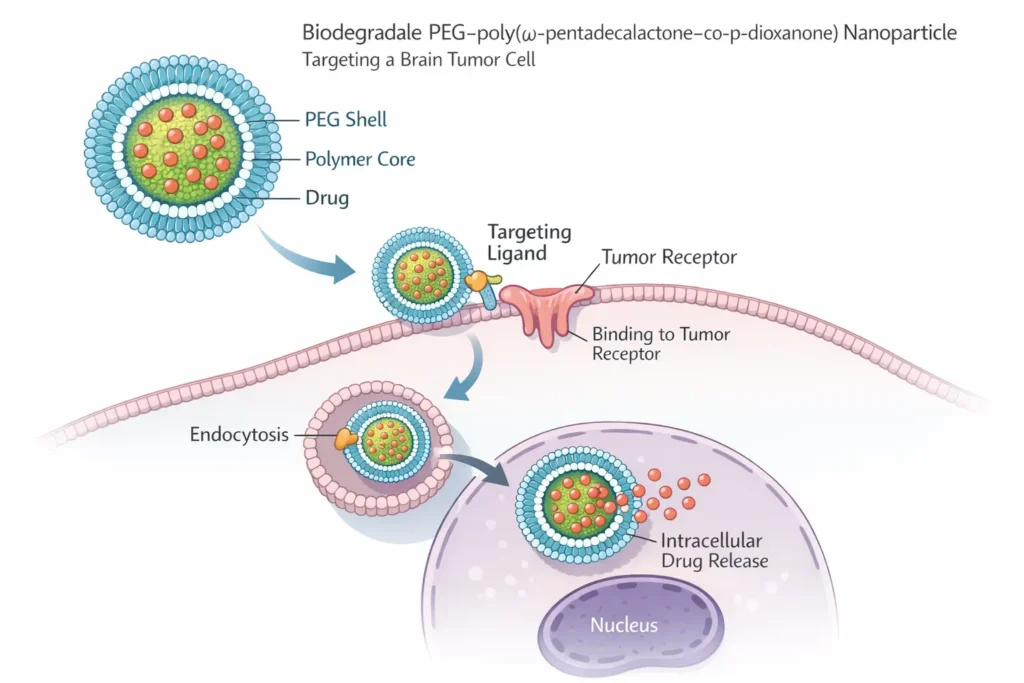
Targeted immunotherapy over the past decade has shown great Progress in the medical field, especially in oncology. The FDA has approved a wide range of immunotherapies, including monoclonal antibodies, immune checkpoint inhibitors, and cell-based inhibitors, all of which have significantly improved patient survival. Currently, using nanocarriers to deliver ICIs offers a promising approach to boost the effectiveness of cancer immunotherapy. By enhancing pharmacokinetics, biodistribution, and local concentration of these inhibitors, nanocarriers can optimize their therapeutic potential while reducing systemic toxicity.
For example, biodegradable PEG–poly(ω-pentadecalactone-co-p-dioxanone) nanoparticles have been investigated for sustained drug delivery in brain tumors. Studies suggest that such nanocarriers not only enhance the retention and distribution of therapeutic agents but also provide the prolonged exposure required for checkpoint inhibitors to achieve maximal effectiveness. For more details on targeted immunotherapy, check https://08102a97h-1104-y-https-link-springer-com.mplbci.ekb.eg/book/10.1007/978-981-99-3746-2
Reference:
1-ADC Detailed Explanation Series: Target Selection in Cancer Therapy, Apr 12, 2024
Pennsylvania, USA
2-Cancer Immunotherapy Dosing: A Pharmacokinetic/Pharmacodynamic Perspective
3-Goodman & Gilman’s: The Pharmacological Basis of Therapeutics – classic source for pharmacodynamics concepts.
4-Cancer Immunotherapy Principles and Practice (ASCO, 2021).
5-Next-Generation Immunotherapy: Advancing Clinical Applications in Cancer Treatment. https://pmc.ncbi.nlm.nih.gov/articles/PMC11546714/
6-Current Landscape and Future Directions in Cancer Immunotherapy: Therapies, Trials, and Challenges, https://pmc.ncbi.nlm.nih.gov/articles/PMC11899461/