Introduction.
Sterility is a fundamental quality requirement for products and materials intended to be sterile. The regulatory guidelines ensure that compliance cannot be established solely by testing a limited number of samples. Sterility must be achieved through a scientifically rational, appropriately validated and consistently controlled manufacturing process.
An effective sterility-assurance system depends on coordinated control of
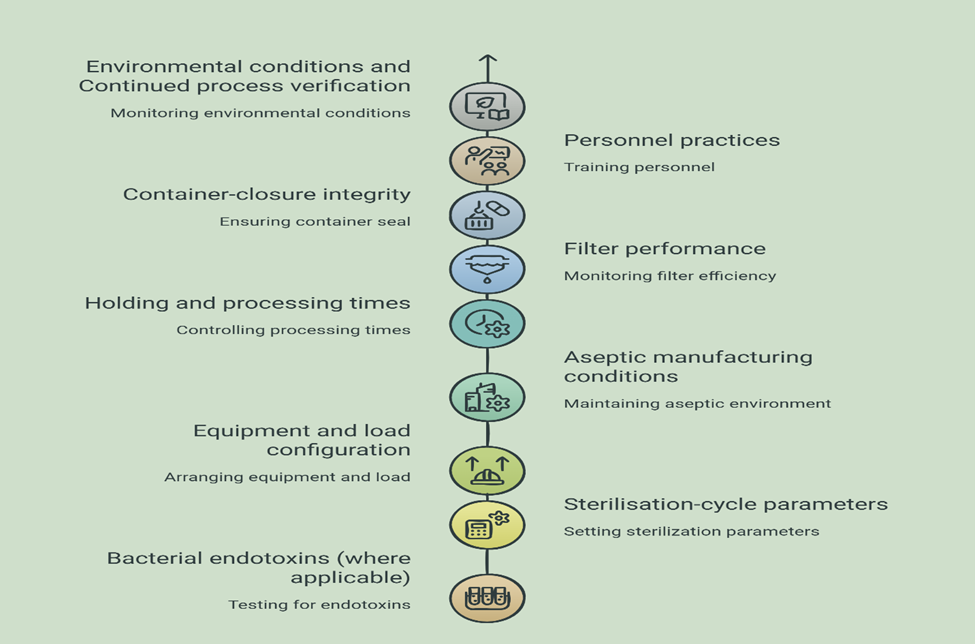
Among all, terminal sterilisation possesses the highest degree of sterility assurance because the product is sterilised after it has been placed and sealed in its final container. This reduces the opportunity for microbial contamination after the sterilisation stage.
In contrast, aseptic processing depends on maintaining the sterility throughout compounding, filtration, filling and closure. Aseptic manufacture therefore carries a greater operational risk because contamination introduced during handling cannot always be detected or eliminated.
Scope of the guideline.
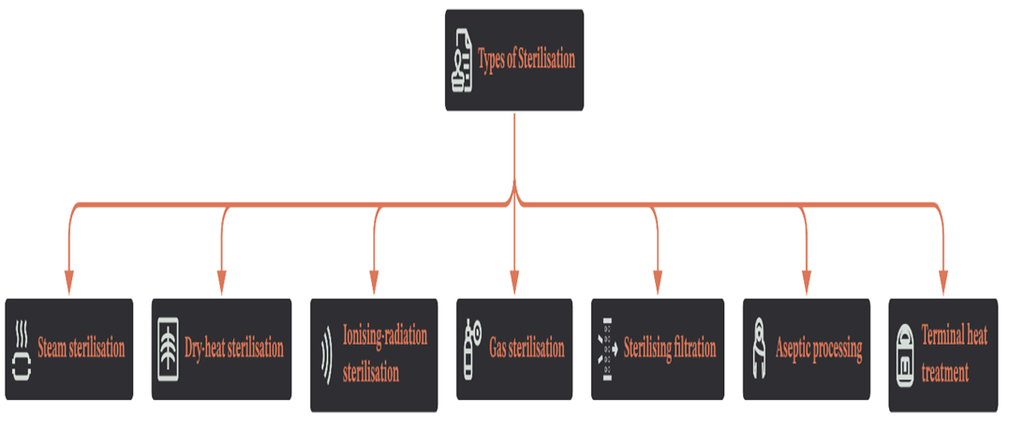
The guideline (EMA/CHMP/CVMP/QWP/850374/2015) applies to chemical and biological medicinal products intended for human or veterinary use. Its covers the sterilisation procedure of
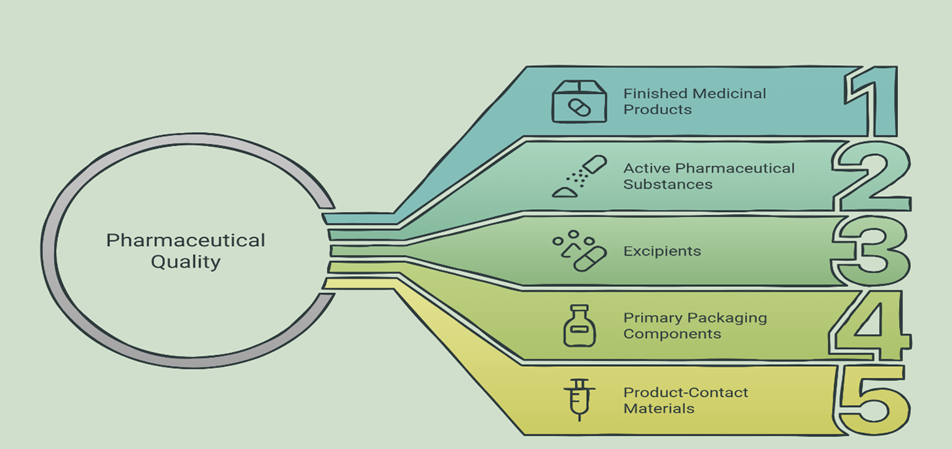
The guidelines mainly deal with bacteria, fungi and bacterial endotoxins. It does not provide a complete framework for controlling viruses, mycoplasma, prions or other adventitious biological agents. These hazards require separate risk assessments and validation strategies under the relevant biological-safety guidelines
The recommendations may require adaptation for advanced therapy medicinal products because such products may involve limited batch sizes, short shelf-lives, patient-specific manufacture and materials that cannot withstand conventional sterilisation. In such cases, a justified risk-based approach may be applied.
Core sterilisation principle
The regulatory expectation is that products intended to be sterile should be terminally sterilised in their final sealed containers where it is technically and scientifically possible
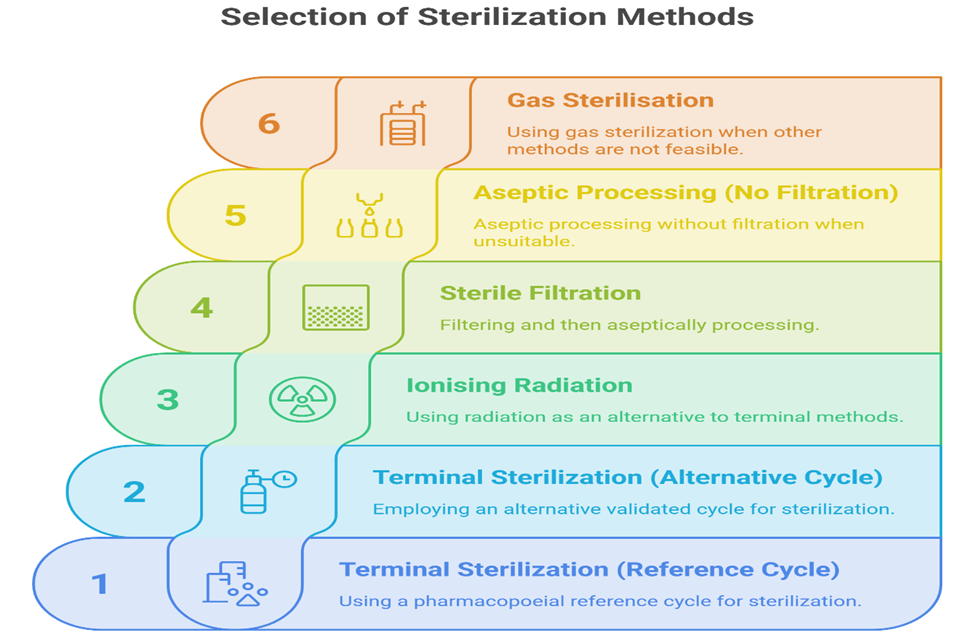
The technically feasible option should be selected. While shifting to the method offering lower sterility assurance requires a strong scientific justification and risk assessment.
The manufacturer is expected to make reasonable development efforts before concluding that terminal sterilisation is unsuitable method. These efforts may include:
- Adjusting the formulation pH
- Changing the type or concentration of excipients
- Selecting more heat-resistant packaging
- Modifying the sterilisation temperature and exposure time
- Optimizing manufacturing conditions
- Examining alternative terminal methods and
- Evaluating the nature and toxicological significance of degradation products.
A shorter shelf-life or restrictive storage condition is not, by itself, sufficient reason to reject terminal sterilisation unless it would create a meaningful difficulty for the patient, veterinarian, healthcare professional or product user.
Sterility assurance level
A validated sterilisation process should ordinarily achieve a sterility assurance level of (10-6) or more. This represents a theoretical probability of no single surviving contaminated unit among one million sterilised units
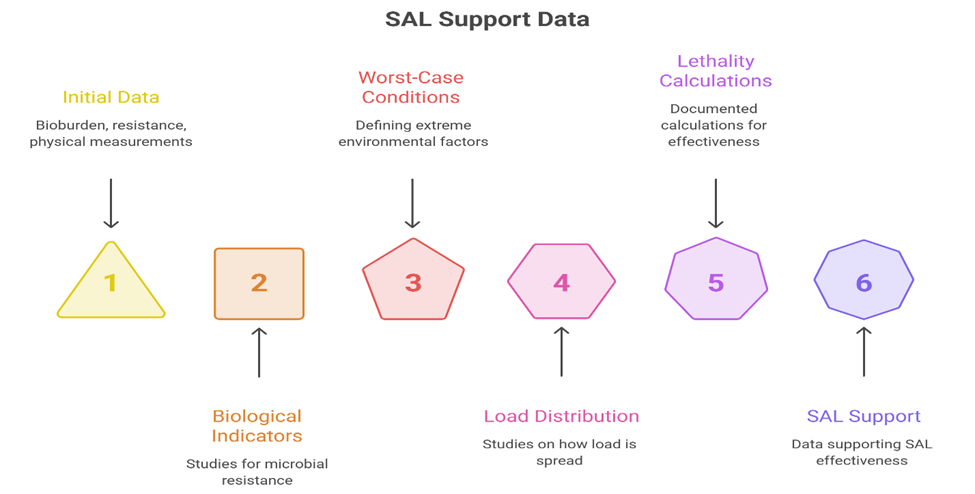
A positive sterility-test result does not independently demonstrate that the required SAL has been achieved. The result must be supported by a validated process.
General dossier requirements
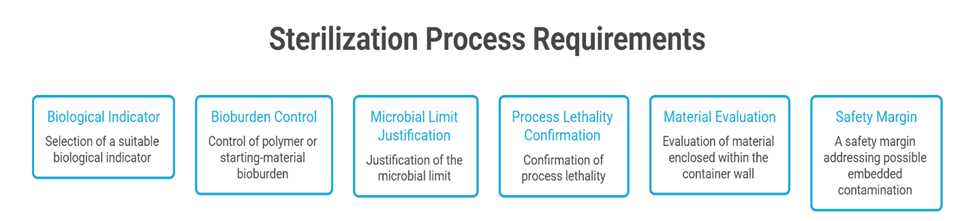
The dossier should describe all sterilisation and aseptic-processing operations applied to the product and its components. This requirement applies to both internal and outsourced activities.
The dossier should include:
- The selected sterilisation or aseptic-processing method
- A scientific justification for method selection
- Name and address of each processing site
- A description of the equipment and processing cycle
- Critical operating parameters
- In-process controls and acceptance criteria
- Pre-sterilisation bioburden limits
- Endotoxin controls, where relevant
- Validation data
- Product and packaging compatibility
- Filter information
- Holding and filling times
- Container-closure considerations; and
- Relevant GMP certification or supplier-qualification evidence.
Processing and holding times described in the dossier become registered elements of the manufacturing process. Inspection findings may result in a requirement to revise these parameters or update the regulatory submission.
Bioburden and endotoxin control
Bioburden must be controlled before every sterilisation or microbial-reduction stage. A high microbial count cannot be justified merely because the subsequent process has sufficient theoretical lethality
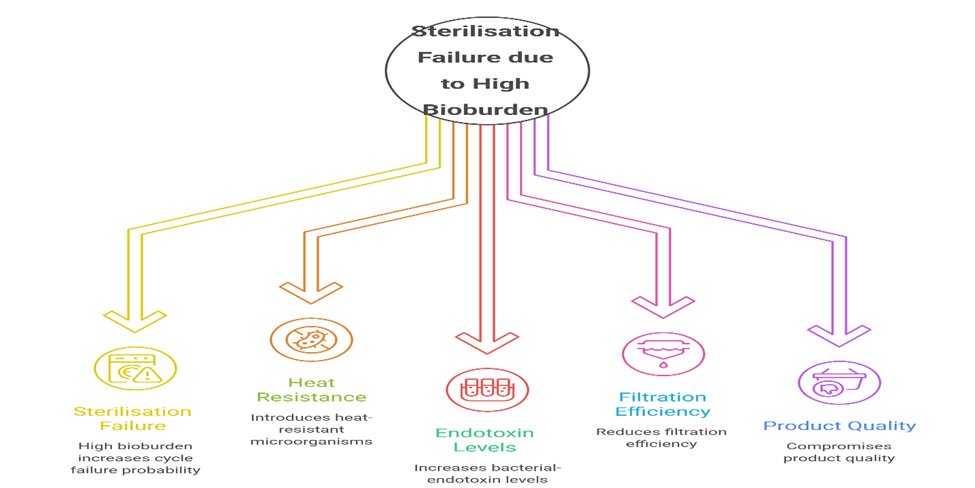
Bioburden and, where appropriate, bacterial-endotoxin limits should be established for
- Active substances
- Excipients
- Primary containers
- Bulk solutions
- Intermediate products and
- The finished formulation before sterilisation.
Routine monitoring should be supported by validated sampling and microbiological test methods.
Steam sterilisation
Steam sterilisation is the preferred method for aqueous products and materials that can tolerate moist heat
Pharmacopeial reference cycle:
The accepted benchmark condition is
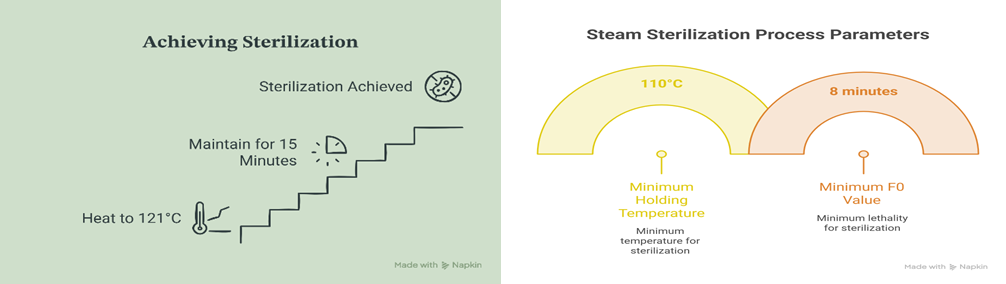
The (F0) value expresses the lethality of the process, equivalent to the exposure time of 121°C, based on a theoretical z-value of 10°C. Processes operating below 115°C, particularly those close to 110°C, require additional scientific justification because microbial inactivation may become less predictable at lower temperatures.
Validation expectations: For a non-reference steam cycle, it should contain
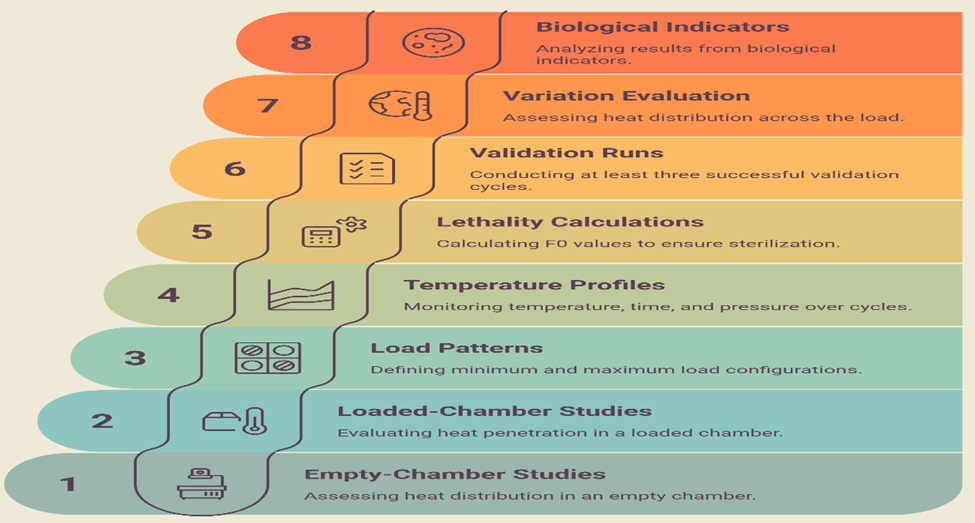
When biological indicators are used, their resistance should be suitable for the intended cycle. Indicators with inadequate heat resistance can create an exaggerated numerical impression of sterility assurance without providing an appropriate safety margin.
Post-aseptic terminal heat treatment
A moist-heat process with (F0 <8) may be applied after aseptic filling when the product cannot tolerate a complete terminal cycle. Such treatment can provide an additional safety margin, but it does not convert a deficient aseptic process into an acceptable one. The aseptic stage must continue to meet all the GMP requirements, including validated media simulations (media fill trials), environmental control, intervention management and personnel qualification
Dry-heat sterilisation or depyrogenation
Dry heat is suitable for heat-resistant materials such as glassware, certain oils, powders and metal components.
The pharmacopoeial reference condition is:
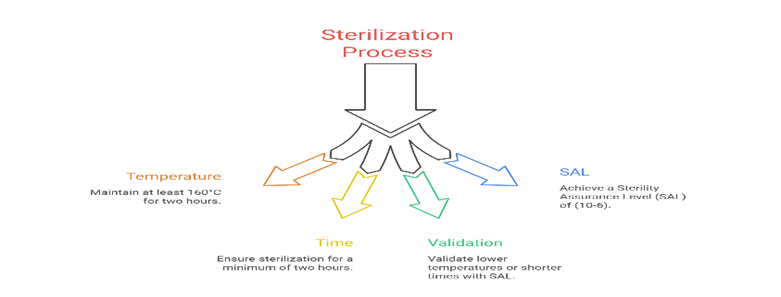
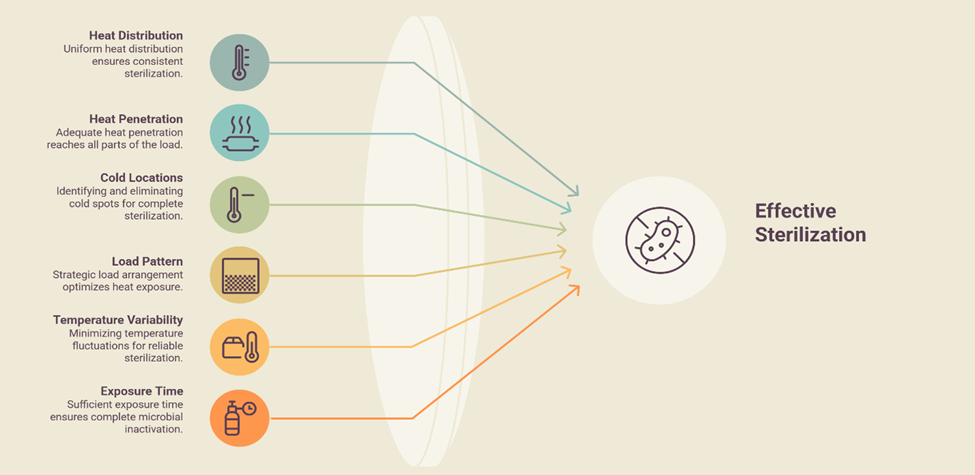
The validation process should evaluate
Dry heat above 220°C may also be used for depyrogenation of glass containers and other heat-resistant materials. Where sterilisation and depyrogenation are combined, the process should generally demonstrate at least a three-log reduction in a suitable heat-resistant endotoxin challenge
Ionising-radiation sterilisation
The reference absorbed dose for radiation sterilisation is at least 25 kGy. A different dose may be used if it is adequately justified and validated to achieve an SAL of (10-6)
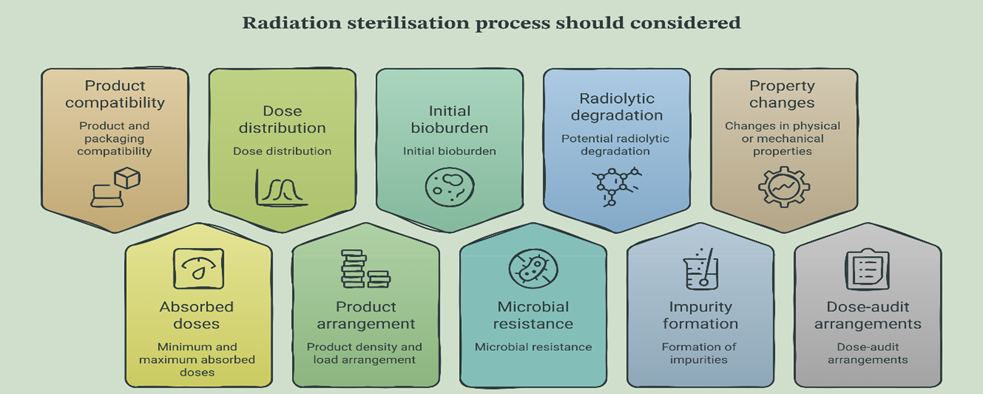
Relevant ISO standards may support development and validation. However, European Pharmacopoeia requirements and applicable EMA guidance take precedence where inconsistencies arise.
Although radiation and heat may provide comparable sterility assurance, heat is normally preferred because it is generally easier to control and presents a lower risk of radiolytic impurity formation.
Gas sterilisation
Gas sterilisation is generally reserved for materials that cannot tolerate heat or radiation. It is primarily used for packaging components and equipment because it acts mainly on exposed surfaces.
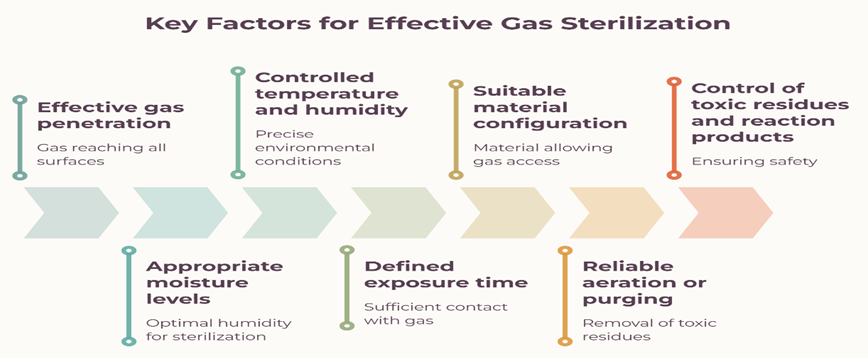
The dossier should describe:
- The sterilisation equipment
- Type and concentration of gas
- Temperature and humidity conditions
- Exposure time
- Preconditioning and conditioning steps
- Initial bioburden
- Biological indicators
- Purging conditions
- Residue limits and
- Validation results demonstrating an SAL of (10-6).
Gas sterilisation of porous powders is generally unacceptable unless no other method is feasible. Microorganisms may become trapped within crystals or compressed regions, preventing adequate contact with the sterilising gas. If gas treatment of a powder is proposed, the material may need to be sterile-filtered and crystallised under aseptic conditions before gas exposure. The applicant must demonstrate adequate penetration and scientifically justify the overall process.
Ethylene-oxide sterilisation
Ethylene oxide is highly effective but also highly toxic and potentially genotoxic. Its use is acceptable only where safer alternatives are unsuitable
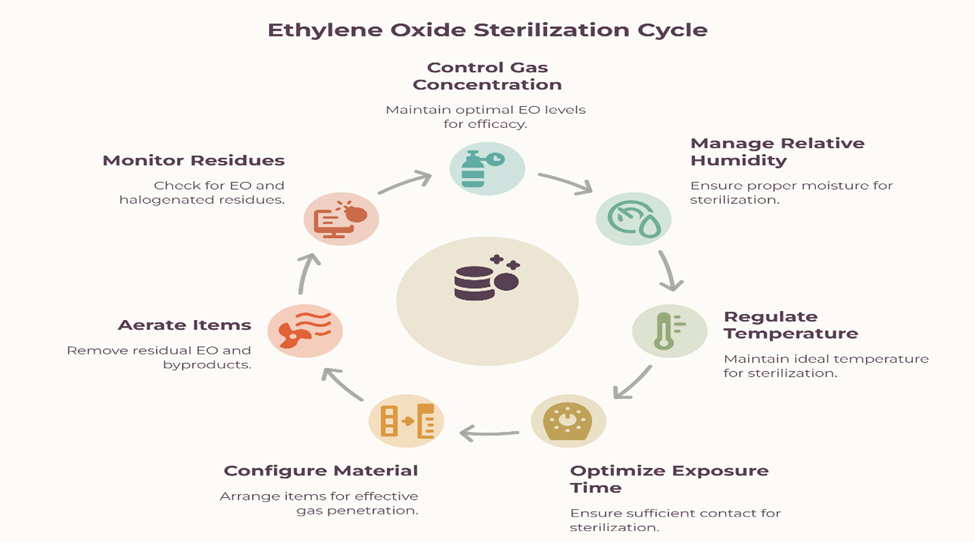
The toxicological assessment should be aligned with guideline ICH M7, Assessment and Control of DNA Reactive (Mutagenic) Impurities in Pharmaceuticals to Limit Potential Carcinogenic Risk (where applicable). Even when a product formally falls outside the scope of ICH M7, comparable principles may be used to establish limits for highly toxic residues.
Where ICH M7 limits can’t be apply, the guideline identifies the following limits
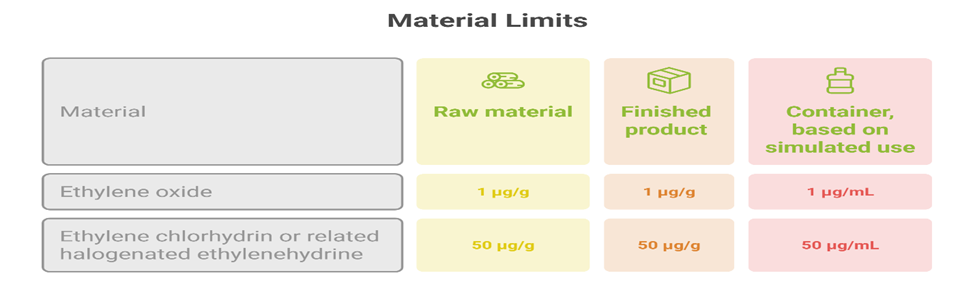
The process should be routinely verified using cycle parameters, biological indicators and sterility testing. Parametric release is not applicable for products sterilised by gas.
Sterilising filtration
Sterilising filtration is used for solutions that cannot withstand terminal sterilisation. Because filtration removes microorganisms rather than destroying all contaminants within a sealed container, it must be followed by appropriate aseptic handling and filling. A sterilising-grade filter with a nominal pore size of 0.22 µm or smaller is generally acceptable
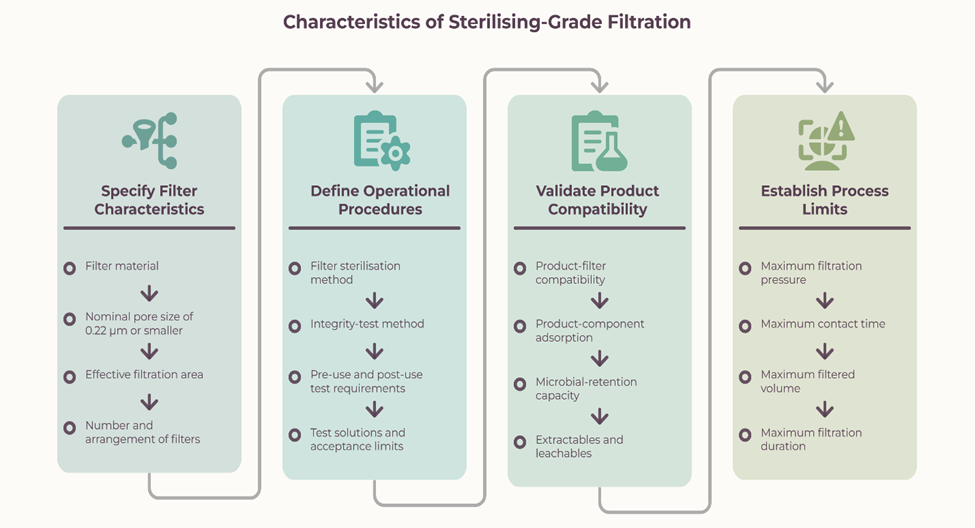
Microbial-retention validation
The filter should be challenged under representative worst-case conditions. Validation trials should include
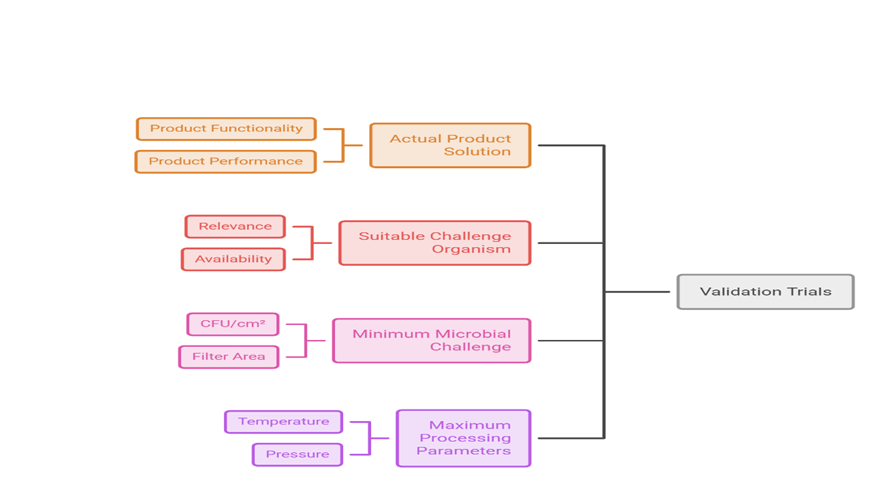
If the product has antimicrobial activity, the effect should be neutralised or an appropriately justified alternative method should be used.
Filter-integrity testing
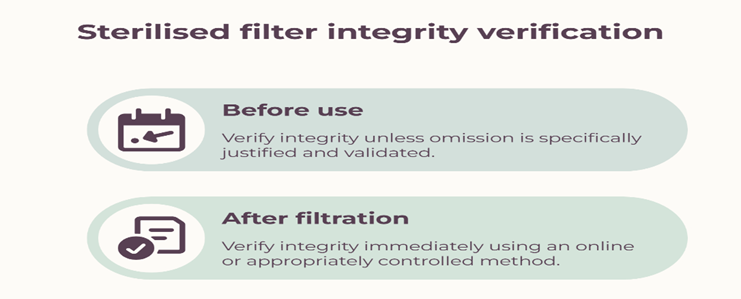
Where the routine integrity-test solution differs from the product solution, a scientifically supported correlation must be established.
Bioburden before filtration
Commercial batches should be tested for bioburden immediately before sterilising filtration. A limit of not more than 10 CFU/100 mL is generally acceptable.
If a prefilter is used only as a precautionary measure, the same bioburden limit should normally apply before prefiltration. Higher limits may be accepted for materials with unavoidable inherent microbial contamination, provided the first filtration stage consistently reduces the bioburden to not more than 10 CFU/100 mL before final sterilising filtration.
Holding and filtration times
If a sterile-filtered bulk solution is not filled into its final containers within 24 hours, it should normally be filtered again immediately before filling. Any alternative approach requires scientific justification. Bioburden should also be assessed before further microbial-reduction steps following a prolonged holding period.
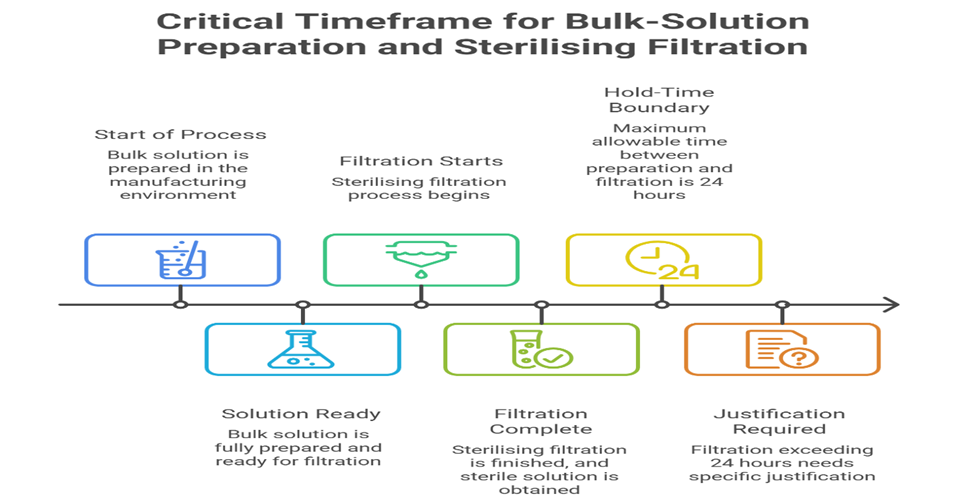
Aseptic processing
Aseptic processing is not a sterilisation method. It is a controlled manufacturing approach intended to prevent contamination of materials that have already been sterilised
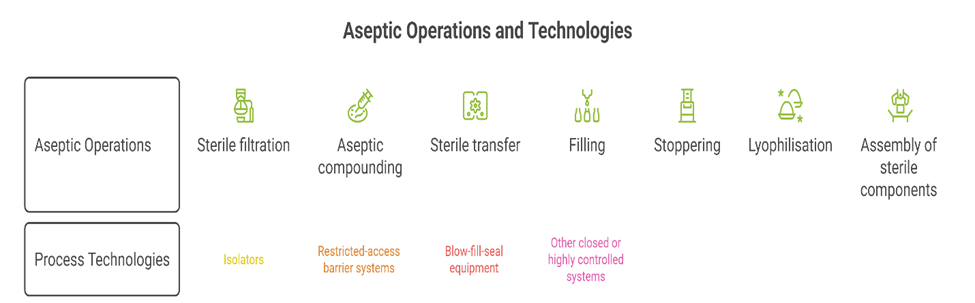
Bulk holding time and filling time should be established, minimized and supported by data. Periods exceeding 24 hours require a formal risk assessment and supporting evidence.
Media-fill studies should represent the proposed process duration and worst-case operating conditions. Although complete media-fill results may not routinely be submitted in the marketing-authorization dossier, regulatory authorities may request them when evaluating extended holding or filling times.
Blow-fill-seal technology
Where blow-fill-seal technology is used for aseptically manufactured products, validation should demonstrate that the formed container surface achieves an SAL of (10-6)
Sterile active substances
General GMP requirements were applied on active-substance until immediately before the material is rendered sterile. Sterilisation and subsequent aseptic handling are treated as activities associated with manufacture of the medicinal product.
A site carrying out these operations should possess an appropriate manufacturing authorization or acceptable GMP certification from a recognized authority.
Equivalent expectations apply when the active substance is supported by:
- A Certificate of Suitability issued by EDQM or
- An Active Substance Master File.
Sterile excipients
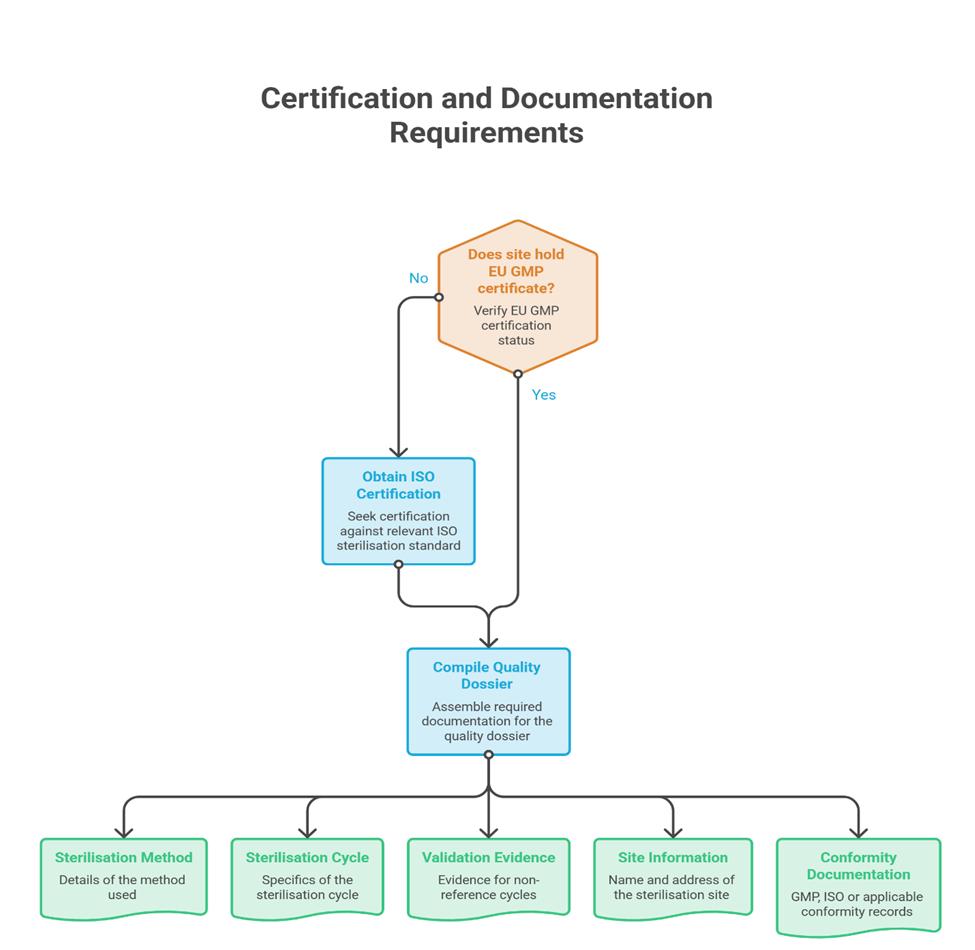
All sites responsible for sterilising excipients should be identified in the quality dossier.
A sterilisation site may not always possess an EU GMP certificate. In such circumstances, the finished-product manufacturer must confirm that the supplier’s quality system and sterilisation activities have been formally evaluated.
Sterility of an excipient used in aseptic manufacture is a critical quality attribute. Supplier qualification should therefore be proportionate to the potential effect of excipient failure on finished-product sterility
Sterile primary containers
The finished-product manufacturer remains accountable for the quality and sterility of primary packaging components, including when sterilisation is outsourced.
The finished-product manufacturer should maintain access to the supplier’s qualification and validation information. This information may be examined during regulatory inspections
Secondary packaging considerations
A secondary package may be used to maintain the external sterility of a primary container, such as a pouch around an infusion bag
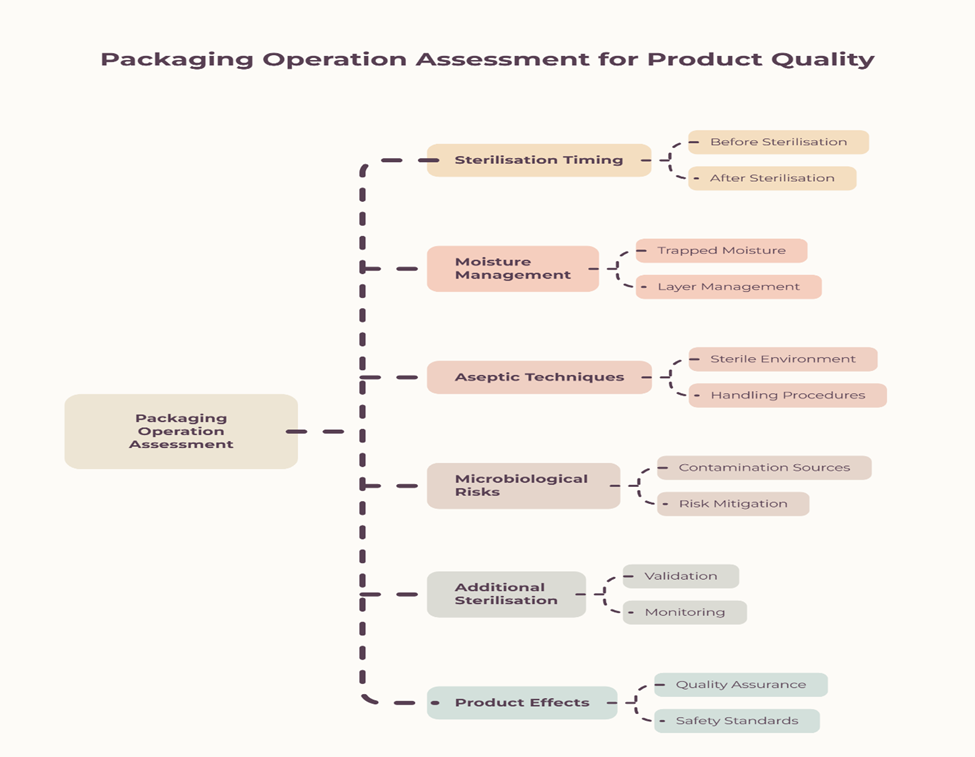
Any additional sterilisation introduced because of secondary packaging should be scientifically justified in relation to both sterility assurance and product quality
Selection of the final sterilisation method
The decision should be based on documented evidence rather than operational preference.
For aqueous products, the manufacturer should first evaluate terminal steam sterilisation. If the reference cycle is unsuitable, an alternative moist-heat cycle should be investigated before sterile filtration and aseptic filling are selected.
For dry powders, non-aqueous liquids and semi-solids, the manufacturer should assess terminal heat treatment, ionising radiation and other suitable terminal processes before moving to aseptic manufacture.
For containers, heat sterilisation should be evaluated before radiation or gas methods.
Heat is placed ahead of irradiation because radiation may introduce additional risks, including radiolytic degradation, and can be more difficult to control across complex load configurations.
Degradation products and benefit-risk evaluation
An increase in degradation products does not automatically make terminal sterilisation unacceptable
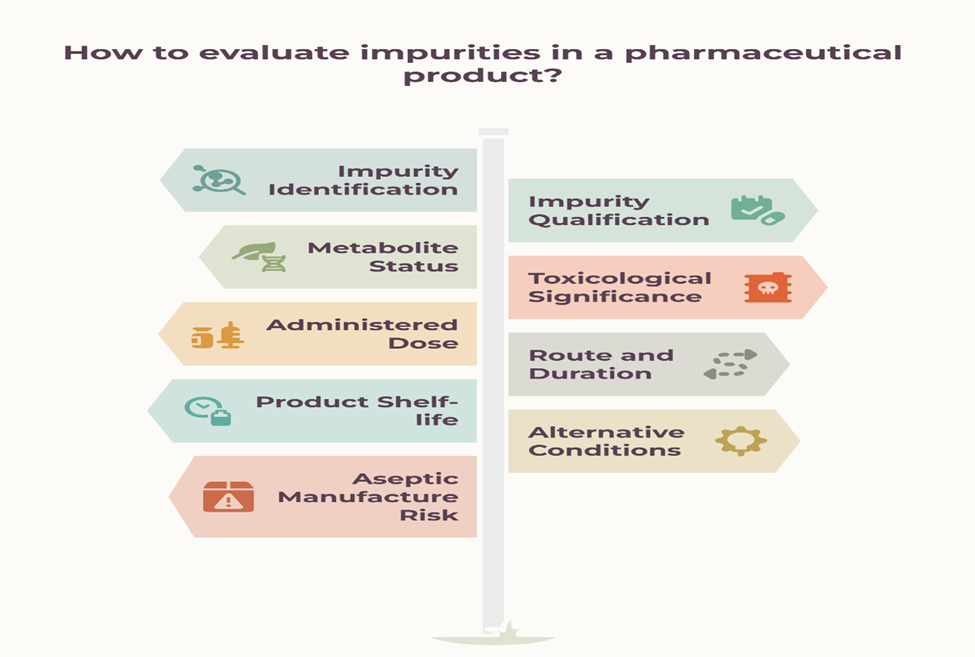
If an impurity remains within an already qualified level, terminal sterilisation may still be the preferred option. Where unqualified degradation products occur at unacceptable levels, aseptic processing may be justified. The dossier should demonstrate that the risk created by degradation has been balanced against the greater contamination risk associated with aseptic processing.
Situations in which aseptic manufacture may offer a user benefit
Aseptic manufacture may occasionally be accepted even when the formulation can tolerate terminal sterilisation
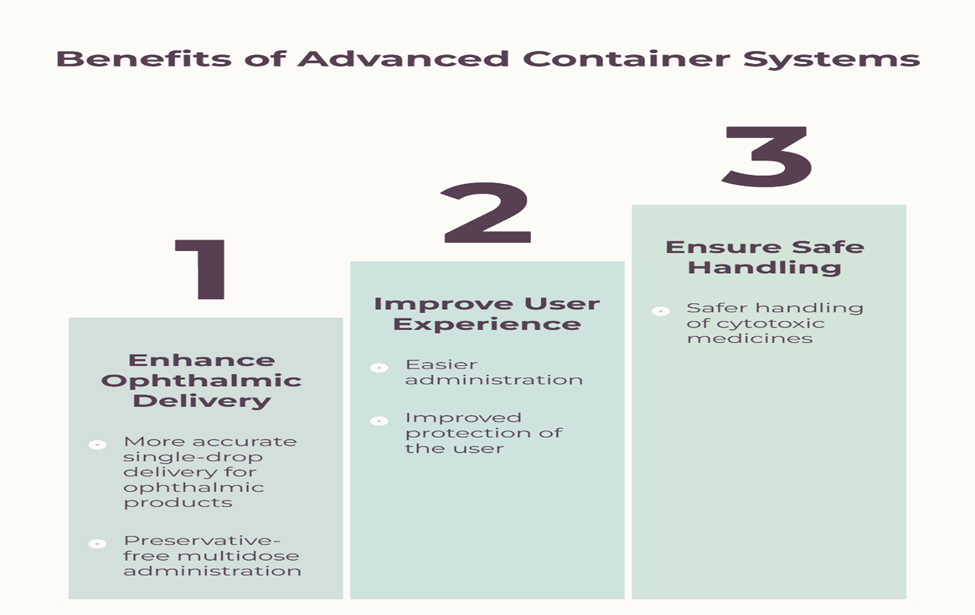
However, the fact that a proposed container is heat-sensitive is not sufficient justification by itself. Alternative materials capable of terminal sterilisation should be evaluated.
For radiopharmaceuticals with a shelf-life of less than one-week, aseptic manufacture may also be considered where terminal sterilisation would materially reduce the usable shelf-life.
Container-closure integrity
The container-closure system must maintain sterility throughout the approved shelf-life.
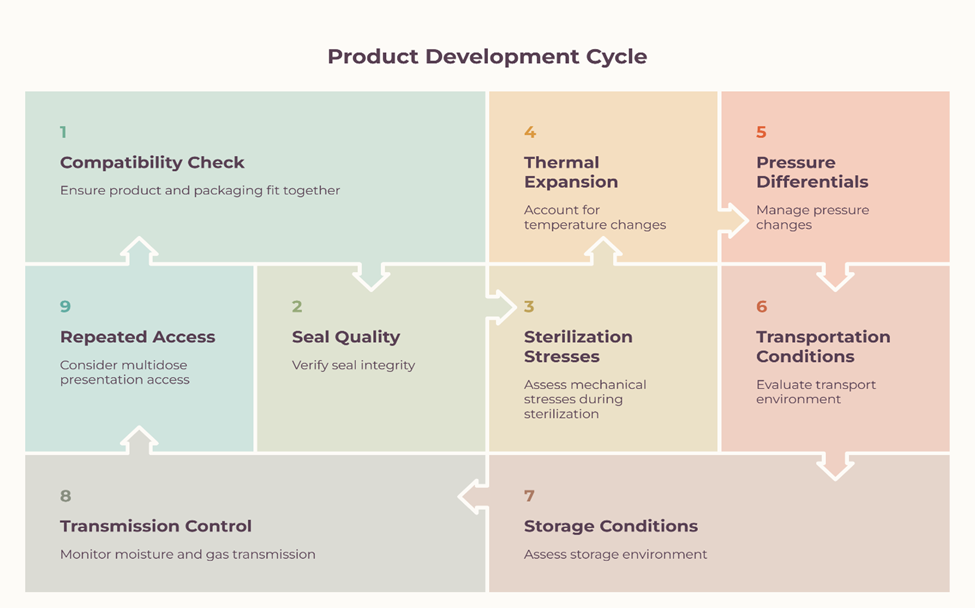
Container-closure integrity should be established through suitable deterministic or probabilistic methods and maintained through the packaging lifecycle.
Quality-control and validation implications
From a QC and validation perspective, the guideline requires organizations to maintain:
- Validated bioburden methods
- Suitable endotoxin-testing procedures
- Defined microbial sampling plans
- Filter-integrity testing
- Biological-indicator qualification
- Heat-distribution and penetration studies
- Sterilisation-cycle validation
- Depyrogenation validation
- Microbial hold-time studies
- Container-closure integrity testing
- Extractables and leachables assessment
- Sterilisation-residue testing
- Continued process monitoring and
- Periodic requalification.
The laboratory should ensure that microbiological methods are sufficiently sensitive for the stated limits. For example, a bioburden limit expressed per 100 mL should normally be supported by testing an adequate sample volume rather than extrapolating from a small sample without justification.
GMP and audit-readiness implications
Inspection readiness requires alignment between the regulatory dossier and actual manufacturing practice. Auditors and inspectors may compare:
- Registered cycle parameters with executed batch records
- Validated loads with routine load configurations
- Approved holding times with actual processing times
- Filter-validation conditions with commercial use
- Supplier certifications with current qualification status
- Bioburden limits with historical results
- Integrity-test acceptance criteria with equipment settings
- Change controls with regulatory commitments and
- Validation reports with routine monitoring records.
Major changes involving the sterilisation cycle, equipment, filter, load, container, sterilisation site or holding time should be evaluated through formal change control. The assessment should determine whether revalidation, stability studies, regulatory notification or prior approval is required.
Recommended implementation framework
A practical implementation program should include the following activities:
- Catalogue every sterilisation and aseptic-processing operation.
- Confirm that the selected method follows the regulatory hierarchy.
- Review the scientific justification for excluding terminal sterilisation.
- Reconcile dossier commitments with current procedures and batch records.
- Verify approved bioburden and endotoxin limits.
- Review filter-validation and integrity-test documentation.
- Confirm that holding and filling times are supported by data.
- Evaluate sterilisation validation and requalification status.
- Review qualification of outsourced sterilisation providers.
- Confirm container-closure integrity throughout shelf-life.
- Assess gas residues, extractables, leachables and degradation products.
- Update SOPs, protocols, specifications and training materials.
- Incorporate sterilisation risks into deviation, CAPA and change-control systems.
- Establish periodic management review of sterility-assurance performance.
Conclusion
The guideline establishes terminal sterilisation as the preferred method for sterile medicinal products and components. Alternative methods remain acceptable, but their use must be supported by product-specific scientific evidence, appropriate validation and a documented benefit-risk assessment.
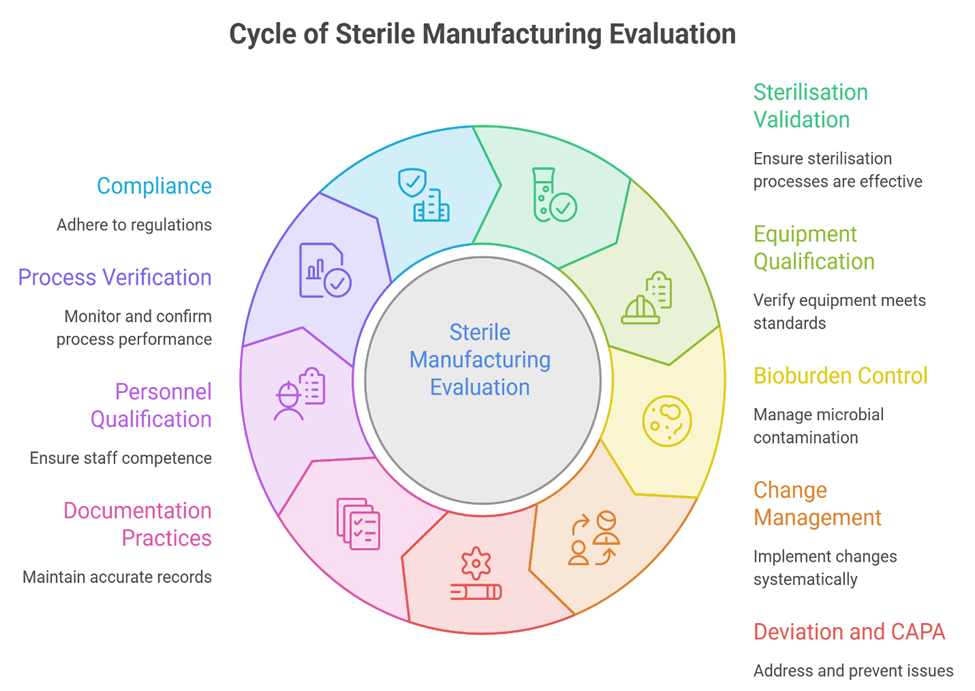
The document also reinforces that sterility is a product and process characteristic rather than a conclusion derived only from finished-product testing. Reliable sterility assurance depends on the integrated control of bioburden, sterilisation lethality, filtration, aseptic handling, holding times, packaging integrity, supplier quality and GMP compliance.
For pharmaceutical manufacturers, the most important operational requirement is to ensure that the selected sterilisation strategy is not only technically suitable but also clearly justified, accurately documented, validated under worst-case conditions and maintained throughout the commercial lifecycle.