Introduction to Fluidized Bed Granulation
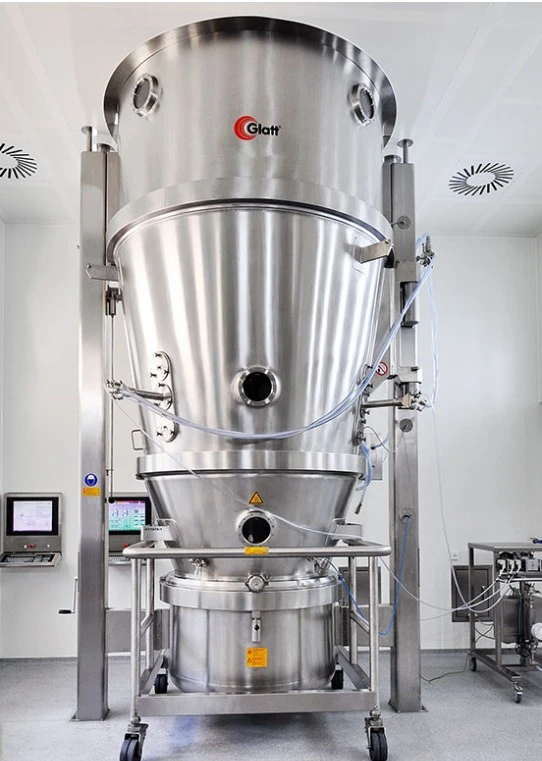
In the pharmaceutical industry, the transformation of fine, cohesive powders into uniform, free-flowing granules is a cornerstone of solid dosage form manufacturing. Fluidized bed granulation (FBG) has emerged as a sophisticated “one-pot” system that integrates mixing, wet granulation, and drying into a single, efficient unit operation . This technology has received considerable attention within the pharmaceutical industry for its ability to address the challenges posed by both low-dose and high-dose formulations, particularly those containing micronized active pharmaceutical ingredients (APIs) .
The Fundamental Principle
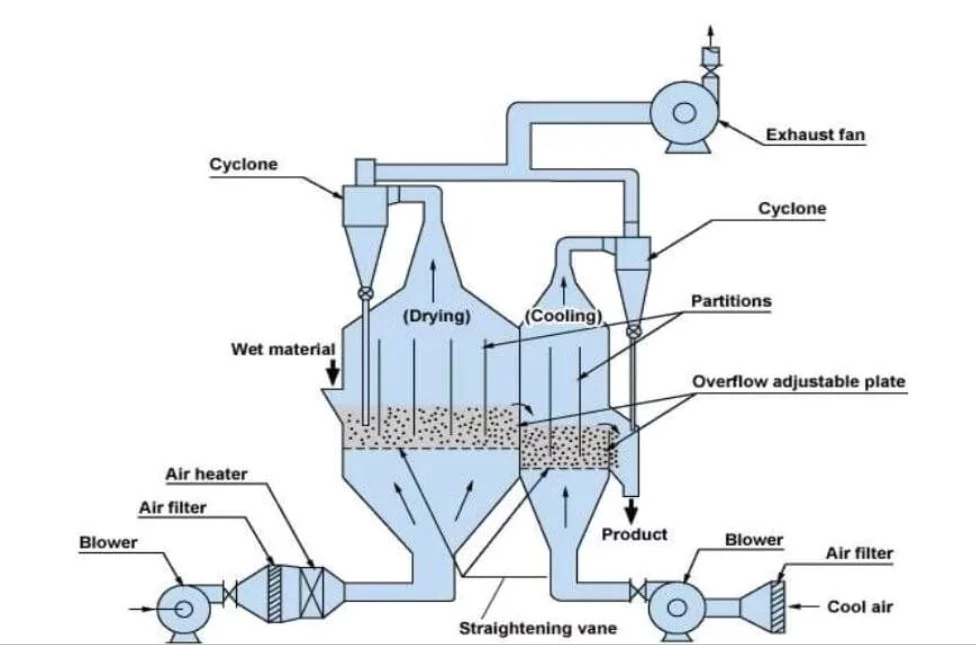
Fluidization is the unit operation by which fine solids are transformed into a fluid-like state through contact with a gas . At certain gas velocities, the fluid supports the particles, giving them freedom of mobility without entrainment. Such a fluidized bed resembles a vigorously boiling fluid, with solid particles undergoing extremely turbulent motion that increases with gas velocity .
This fundamental principle, which began with the work of Standard Oil Company and M.W. Kellogg Company in 1942 for catalytic cracking applications, has been adapted extensively for pharmaceutical granulation . The controlled fluidized state creates the ideal environment for uniform mixing, heat transfer, and particle interaction—essential conditions for producing high-quality pharmaceutical granules.
The Pharmaceutical Granulation Process
1. Particle Engineering Challenges
Micronization is an important technology in the pharmaceutical industry, where particle diameter is reduced to the micrometer scale to enhance API dissolution rates and bioavailability. However, Geldart’s Type “C” powders—characterized as cohesive and difficult to fluidize with gas flows—present significant processing challenges. Geldart’s Type “C” powders are fine, cohesive materials (typically under 30-45 μm) where interparticle forces (like van der Waals forces) significantly outweigh gravitational forces. Because of this, they do not fluidize normally; instead, they tend to channel, agglomerate, or form large, stable ratholes when gas flows through them. Fine particles are vulnerable to elutriation, being swept away from the spray zone by fluidization air, which introduces a fundamental contradiction in the granulation process .
Wet granulation is especially applicable to formulations that are poorly suited for dry-mixing and direct-compression pathways. These include formulations with micronized powders (D90 < ~50 μm), particularly those with extremes in API content—either very low (less than ~5% of total mass) or very high (more than ~40% of total mass) . For low-dose formulations, achieving content uniformity is critical, as the small amount of API must be evenly distributed throughout the mixture. High-dose formulations often present challenges related to flow properties and bulk density.
2. The Granulation Cycle
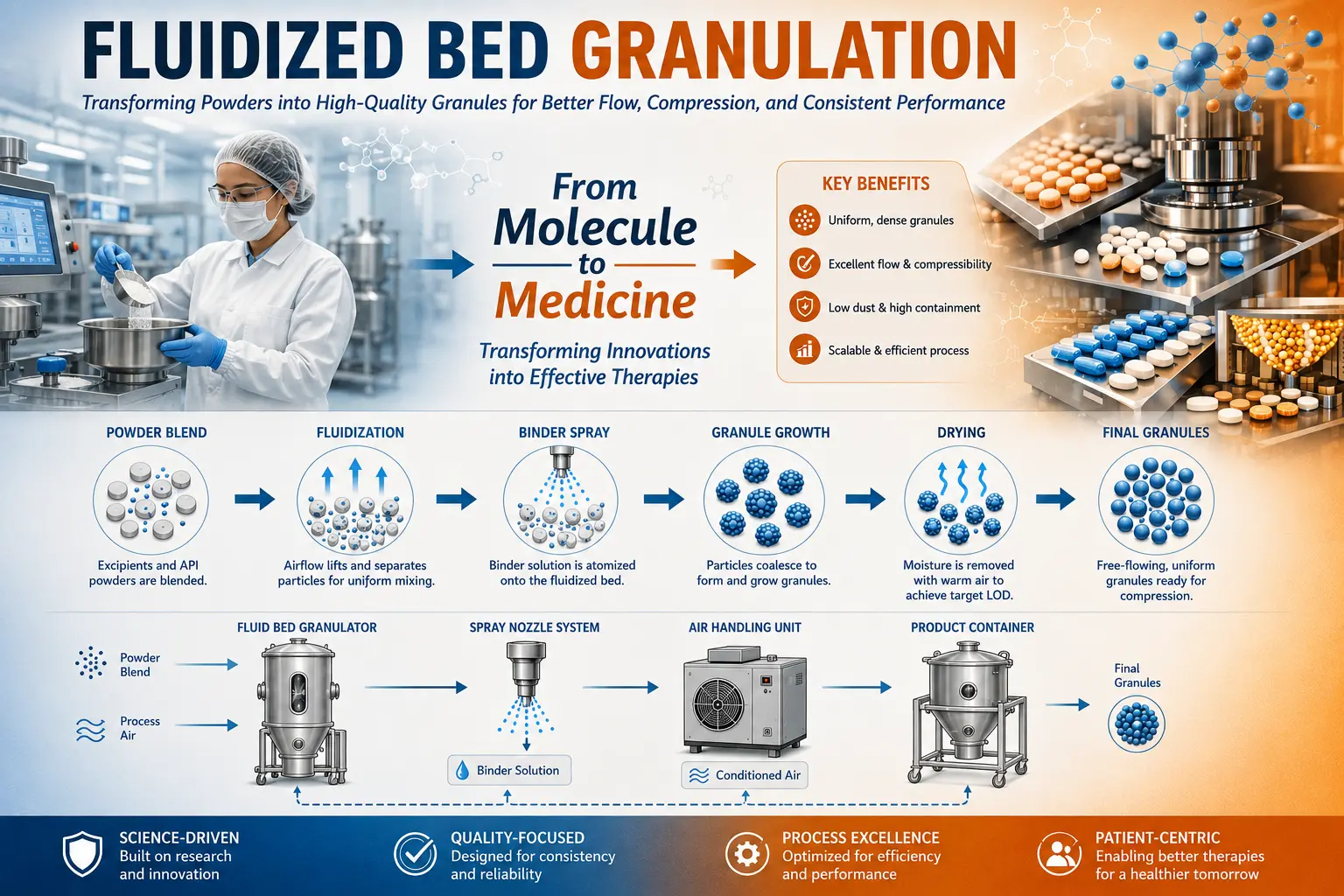
In fluidized bed granulation, powder is fluidized in a spray-flux of binder to create granules having controlled size and shape distributions. The ideal process objective maximizes the fraction of product mass in the fluidized bed zone where it is in direct contact with the binder spray flux.
The binder—typically an aqueous solution of polymers such as hydroxypropyl cellulose (HPC)—is atomized through spray nozzles. As droplets contact the fluidized powder, they wet particle surfaces, promoting agglomeration. The continuous motion of particles in the fluidized state ensures uniform binder distribution and controlled granule growth.
Critical Process Parameters of Fluidized Bed Granulation
Pharmaceutical quality by design (QbD) principles require systematic identification of critical process parameters (CPPs) that impact critical quality attributes (CQAs). Research has identified several key CPPs for fluidized bed granulation:
| Parameter | Impact on CQAs | Risk Priority |
| Binder mass flow rate | Mass uniformity, Particle Size Distribution (PSD), hardness | Very High |
| Drying temperature | Moisture content, hardness, flowability, stability | Very High |
| Inlet air temperature | Mass uniformity, PSD, hardness | High |
| Drying time | Moisture content, hardness, friability, flowability | High |
| Atomization pressure | Mass uniformity | Moderate |
| Inlet air flow rate | Moisture content, hardness, mass uniformity | Moderate |
These parameters must be stringently controlled as they exert substantial influence on product safety, efficacy, and quality.
Early pharmaceutical research established the reproducible correlation between granulation parameters and final granule properties. Studies on aminophenazone granules demonstrated that mean granule diameter and compression work could be controlled through factors including compressed air pressure, fluidizing air velocity and temperature, and binder concentration.
Formulation and Process Optimization of Fluidized Bed Granulation
1. The Micronized API Challenge
Recent research has focused on optimizing FBG for challenging pharmaceutical formulations. Studies using micronized acetaminophen (μ-APAP) and microcrystalline cellulose (MCC, Avicel PH-102) have explored strategies to overcome elutriation issues.
**Pre-wetting** has emerged as a valuable optimization strategy. By “priming” the powder pre-blend with a small amount of moisture prior to fluidization and binder spraying, the process achieves more stable fluidization and narrower granule size distributions . This approach is particularly relevant for formulations containing highly absorbent excipients like MCC.
**Blowback pressure control** provides another optimization pathway. Dynamic control of blowback pressures during granulation minimizes the mass fraction weighted residence time in the elutriation-blowback loop, resulting in more uniform granule size distributions.
2. Experimental Design Approaches
Factorial and fractional factorial designs have been extensively employed to optimize fluid bed granulation. These systematic approaches allow researchers to evaluate the effects of multiple formulation factors and process parameters simultaneously.
For metoprolol tartrate formulations—a notoriously difficult-to-process API—fractional factorial design revealed that high atomizing pressure produces finer granules with larger polydispersion index and higher density, while lower binder concentrations yield granules with superior flow properties and reduced sticking tendencies in tableting . Sulfadiazine granulation studies similarly demonstrated the utility of fractional factorial design for assessing binder concentration, fluidizing air conditions, and binder solution flow rate effects on granule physical characteristics.
Process Control and Quality Attributes
1. Granule Characterization
In pharmaceutical manufacturing, uniform particle size distribution (PSD) and bulk density are critical material attributes of intermediate granules. PSD serves as a proxy for compositional homogeneity, while bulk density affects consistent tableting.
The geometric standard deviation (σg) provides a dimensionless measure of PSD spread and is commonly used to evaluate granule uniformity . Analysis of in-line pressure drop data can infer the balance of residence times in the fluidization (binder spray) and elutriation loops, enabling process control adjustments.
2. Drying Endpoint Determination
The granulation process relies on product temperature as an endpoint indicator. During processing, product moisture increases to a maximum during spraying, followed by drying to reach final moisture levels . Precise control of this drying phase is essential for achieving consistent granule properties.
Applications and Advantages
Fluidized bed granulation offers several distinct advantages for pharmaceutical manufacturing:
Challenges and Considerations
While highly capable, fluid bed granulation can be more expensive compared to other technologies and requires effective balance of control variables. It is often employed for challenging formulations where other processes lack sufficient capability.
The fundamental challenge of fluidizing micronized powders—balancing the need for fluidization against the risk of elutriation—requires careful process optimization. Classical approaches involving iterative optimization of inlet airflow and binder spray rates are inefficient and experimentally burdensome, driving the need for more systematic, data-driven optimization strategies.
Expert Guidance
Dilip Parikh, a leading authority in pharmaceutical process technology with over 40 years of industrial experience, has extensively documented fluid bed processing technology. His comprehensive text, *How to Optimize Fluid Bed Processing Technology*, addresses the important components of fluid bed granulation, providing answers to commonly arising problems with numerous practical examples and case studies. The book covers fluidization theory, equipment functionality, formulation requirements, process variables, scale-up, troubleshooting, and process evaluation.
Conclusion
Fluidized bed granulation remains a vital technology in pharmaceutical manufacturing, enabling the production of high-quality granules for oral solid dosage forms. The combination of systematic experimental design, careful parameter control, and emerging optimization strategies positions FBG as an essential tool for addressing the challenges of modern drug formulations. As the industry continues to develop increasingly complex APIs—including micronized and poorly soluble compounds—the role of fluidized bed granulation in ensuring product quality, safety, and efficacy will only grow in importance.
Below is a list of popular pharmaceutical references that support the technical content of the article. These sources are central to understanding fluidized bed granulation, covering its foundational principles, process optimization, and scale-up.
Key Textbooks and Comprehensive Guides
**Parikh, D. M. (2017).** *How to Optimize Fluid Bed Processing Technology: Part of the Expertise in Pharmaceutical Process Technology Series*. Academic Press.
This is a comprehensive text that covers everything from the theory of fluidization and equipment functionality to process development, granulation, drying, and coating. It is often considered a go-to resource for scientists and engineers working with this technology.
Foundational Research Articles
**Gorodnichev, V. I., et al. (1981).** The construction and uses of factorial designs in the preparation of solid dosage forms. Part 2: Granulation in a fluidized bed. *Pharmazie*, 36(4), 270-273.
This is an early, seminal study that used a factorial design of experiments to find the optimum conditions for preparing granules in a fluidized bed, establishing a reproducible correlation between process parameters (like air pressure and binder concentration) and granule properties.
**Thiel, W. J., et al. (1982).** Fluidized bed granulation of an ordered powder mixture. *Journal of Pharmacy and Pharmacology*, 34(11), 692-699.
This classic paper investigates the use of fluidized bed granulation to improve the content uniformity of low-dose formulations, demonstrating its value in solving segregation problems common in powder mixtures.
Modern Research and Recent Advances
**Koleilat, L., Paasche, C. K., Wade, J., Hanson, J., Wassgren, C., & Mort, P. (2024).** Fluid bed granulation – Process optimization. *Powder Technology*, 449, 120358.
This recent paper focuses on optimizing the fluid bed granulation process for challenging pharmaceutical formulations. It explores strategies like pre-wetting and blowback pressure control to achieve stable fluidization and narrow granule size distributions, which is critical for product quality.
**Sen, M., Butikofer, S., Wolfe, C. N., Gupta, S., & Butterbaugh, A. S. (2024).** Developing a pharmaceutical fluid bed granulation & drying process via design of experiments based on a multivariate model. *Chemical Engineering Research and Design*, 392-405.
This work presents a modern approach to process development, using a multivariate model and design of experiments to optimize both the granulation and drying steps, which is aligned with Quality by Design (QbD) principles.
**Wade, J., et al. (2020).** Exploring the wet granulation growth regime map – validating the boundary between nucleation and induction. *Chemical Engineering Research and Design*, 156, 469.
This study contributes to the fundamental understanding of granule growth in wet granulation, helping to define the conditions under which granules form and grow.
Important Review Articles
**Burggraeve, A., Monteyne, T., Vervaet, C., Remon, J. P., & De Beer, T. (2013).** Process analytical tools for monitoring, understanding, and control of pharmaceutical fluidized bed granulation: A review. *European Journal of Pharmaceutics and Biopharmaceutics*, 83(1), 2-15.
This is a critical review that summarizes the state-of-the-art in using Process Analytical Technology (PAT) tools (like NIR and FBRM) for real-time monitoring and control of the fluid bed granulation process.