Abstract
Pharmaceutical Quality Assurance is undergoing a paradigm shift from traditional, compliance driven systems to digitally empowered and intelligent quality ecosystems. The advent of industry 4.0 technologies has introduced Quality 4.0—characterized by automation, real-time data, connectivity, and advanced analytics— to improve product quality, patient safety, and operational efficiency. Looking ahead, Quality 5.0 extends this vision by placing human intelligence, sustainability, and ethical responsibility at the core of quality management. This review explores the evolution of Pharmaceutical Quality, key enablers of Quality 4.0, the pathway towards human-centric Quality 5.0 practical pharmaceutical roadmap, regulatory expectations, challenges, and future trends. Real world examples demonstrate how organizations are leveraging digital technologies, including Artificial Intelligence (AI), to achieve proactive and preventive quality outcomes.
Keywords: Quality 4.0, Quality 5.0, Digital Transformation, AI, eQMS, Data Integrity, Pharmaceutical Quality Assurance, Regulatory Compliance
Introduction
The global pharmaceutical industry faces rising complexity due to advanced therapies, stringent regulations, and patient expectations for safe and efficacious medicines. Traditional quality systems, though effective for decades, rely heavily on retrospective reviews and manual interventions. With increasing data availability and digital connectivity, organizations now have the opportunity to move from “quality by inspection” to “quality by design and intelligence”. Quality 4.0 leverages technologies such as IoT, AI, machine learning, cloud computing, and advanced analytics to drive data driven decision-making. Building upon this, Quality 5.0 emphasizes on human-centric collaboration, sustainability, and resilience to ensure long term value for patients and society.
Why Traditional QA Needs A Transformation
Below mentioned drivers necessitate a transition from reactive to proactive quality management models.
- Increasing product and process complexity.
- Globalized supply chain with higher risk exposure
- Data explosion and information silos
- Regulatory expectation for real-time assurance
- Demand for agility, resilience and sustainability
Difference Between Quality 4.0 and Quality 5.0
| Aspect | Quality 4.0 | Quality 5.0 |
| Focus | Digital transformation | Human-centric + technology collaboration |
| Key Enablers | AI, IoT, Big Data, Automation, Cloud | AI + sustainability + human expertise |
| Role of People | Users of digital systems | Decision-makers supported by intelligent systems |
| Quality Approach | Predictive | Proactive, Predictive & Purpose-driven |
| Sustainability | Efficiency oriented | Environment, Society & Governance integrated |
| Outcome | Operational Excellence | Resilient, ethical and sustainable quality ecosystem |
Evolution of Pharmaceutical Quality
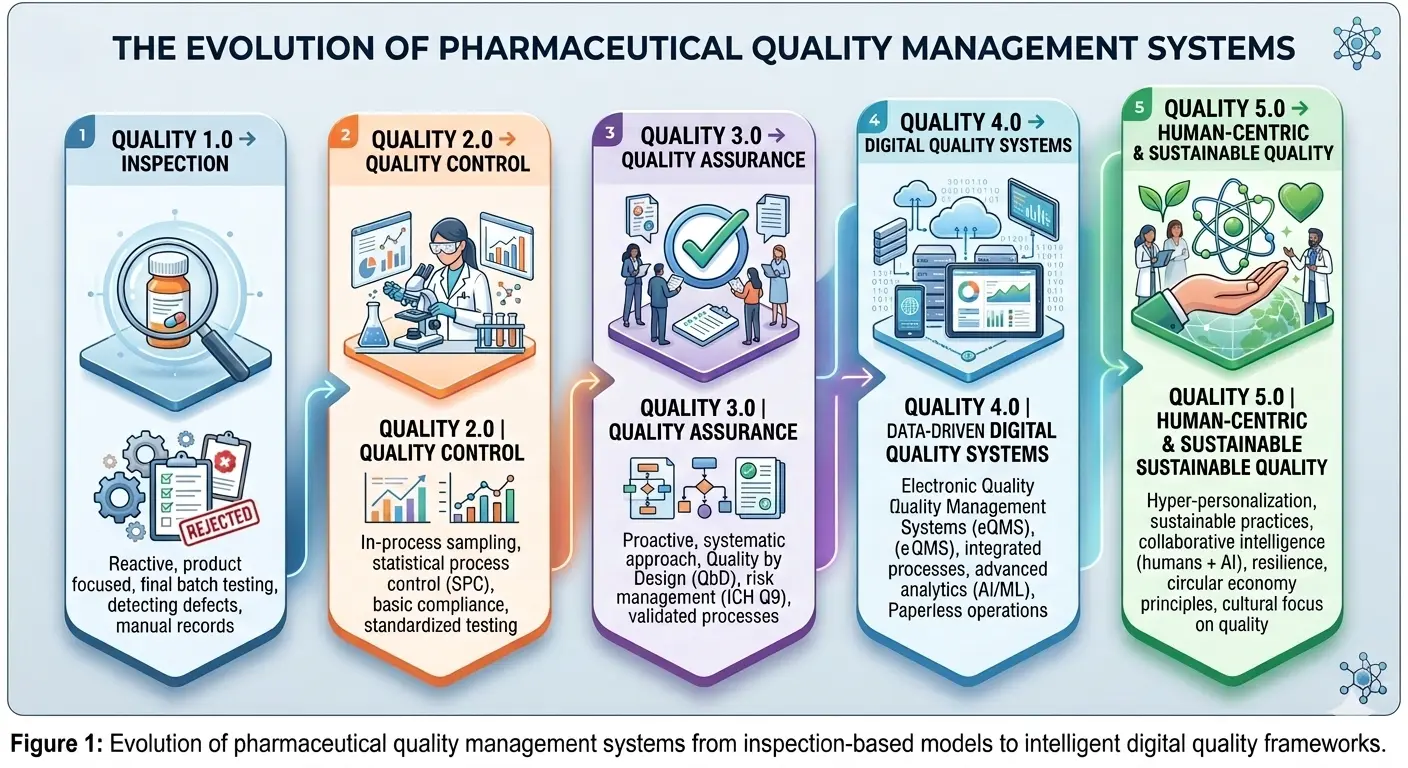
Quality management has continuously evolved alongside advances in pharmaceutical manufacturing, regulatory expectations, and technological innovation. The journey from traditional inspection-based quality systems to today’s intelligent, data-driven approaches reflects the industry’s commitment to improving patient safety, operational efficiency, and regulatory compliance.
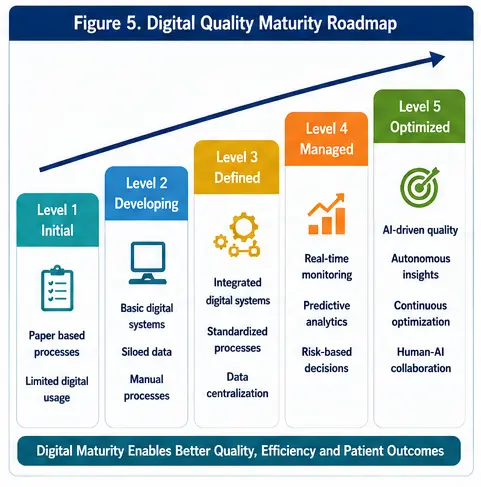
Each stage of quality evolution has addressed the limitations of its predecessor. While early quality systems focused primarily on detecting defects after production, modern quality frameworks emphasize preventing quality issues through real-time monitoring, predictive analytics, and continuous improvement. Understanding this evolution helps pharmaceutical professionals appreciate why digital transformation has become essential rather than optional.
Understanding Quality 4.0 Pharmaceutical Quality Assurance
Quality Assurance has traditionally focused on ensuring compliance through documentation, inspections, and manual review of manufacturing records. Although these activities remain fundamental, today’s pharmaceutical industry generates enormous amounts of manufacturing and quality data every minute. The challenge is no longer collecting information—it is using that information to make faster, smarter, and more reliable quality decisions.
This shift has led to the emergence of Quality 4.0, a concept that applies Industry 4.0 technologies to quality management. Instead of relying solely on retrospective investigations, Quality 4.0 enables organizations to monitor processes in real time, predict quality risks, and support data-driven decision-making throughout the product lifecycle.
Unlike traditional quality systems, which mainly identify problems after production is complete, Quality 4.0 emphasizes prevention rather than correction. Advanced digital technologies continuously collect, analyze, and interpret manufacturing data, allowing QA professionals to identify process trends before they become deviations or product failures.
Rather than replacing Quality Assurance professionals, these technologies enhance their ability to make informed decisions, reduce manual workload, and improve overall process reliability.
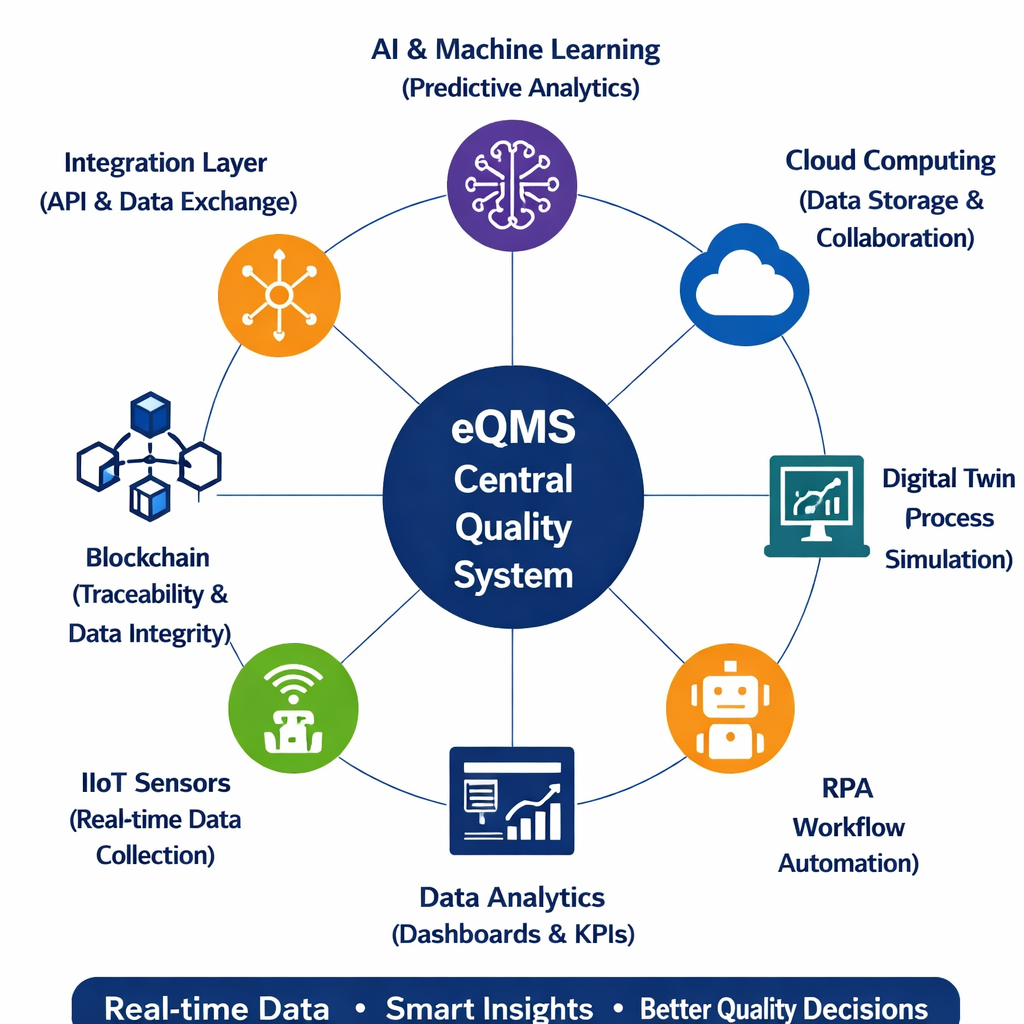
Key Technologies Supporting Quality 4.0
Several advanced technologies play a critical role in enabling Quality 4.0 in pharmaceutical manufacturing.
a) Artificial Intelligence and Machine Learning
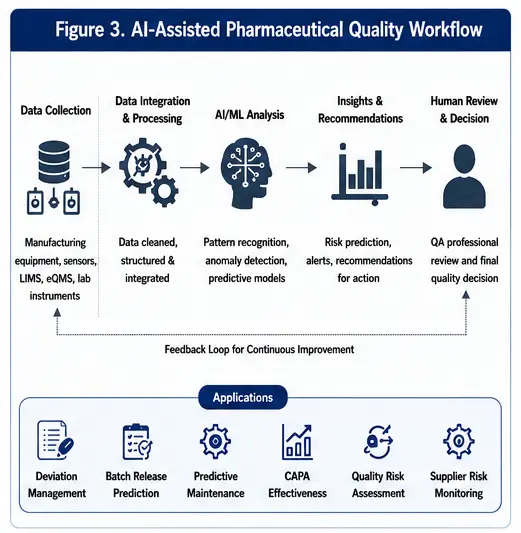
Artificial intelligence and machine learning algorithms allow organizations to analyze large datasets and identify patterns that may indicate potential quality risks. These technologies can support predictive maintenance, process optimization, and automated deviation detection.
b) Internet of Things (IoT)
IoT devices enable real-time monitoring of manufacturing equipment, environmental conditions, and production parameters. Sensors installed on equipment continuously collect data that can be analyzed to detect anomalies or performance deviations.
c) Electronic Quality Management Systems (eQMS)
eQMS platforms replace paper-based documentation with digital workflows for managing deviations, CAPA, change control, training records, and audits. These systems improve efficiency and ensure standardized quality processes.
d) Data Analytics and Big Data
Advanced analytics tools enable pharmaceutical companies to interpret complex datasets generated during manufacturing processes. These insights help identify trends, optimize operations, and enhance decision-making.
e) Cloud Computing
Cloud platforms provide scalable infrastructure for storing and analyzing large volumes of quality data. They also facilitate remote collaboration and integration with enterprise systems.
f) Blockchain Technology
Blockchain provides a secure, tamper-resistant digital ledger for recording transactions throughout the pharmaceutical supply chain. Each transaction becomes permanently linked to previous records, making unauthorized changes extremely difficult.
g) Digital Twins
A Digital Twin is a virtual representation of a physical manufacturing process or equipment. Using real-time production data, engineers can simulate manufacturing conditions without interrupting actual production.
h) Robotic Process Automation (RPA)
Many QA activities involve repetitive administrative tasks that consume valuable time. Robotic Process Automation performs routine activities automatically without replacing scientific decision-making.
Together, these technologies create an interconnected digital ecosystem that supports proactive quality management and continuous improvement.
Regulatory Perspective: Building Digital Quality Within GMP Compliance
Digital transformation in pharmaceutical manufacturing cannot succeed without regulatory compliance. Regardless of how advanced Artificial Intelligence (AI), cloud computing, or predictive analytics become, every computerized quality system must comply with international pharmaceutical regulations. Regulatory agencies encourage innovation, but they also expect manufacturers to demonstrate that digital systems are reliable, validated, secure, and capable of protecting product quality throughout the product lifecycle.
Rather than introducing entirely new regulatory frameworks, Quality 4.0 applies existing GMP principles to modern digital technologies. Organizations must therefore ensure that every digital solution maintains data integrity, supports traceability, and generates trustworthy records suitable for regulatory inspections.
| Organization | Key Guidance | Importance for digital QA |
| FDA | 21 CFR Part 11 | Electronic records and electronic signatures |
| EMA | EU GMP Annex 11 | Computerized systems |
| ICH | Q8, Q9(R1), Q10, Q12 | Risk management and quality systems |
| WHO | WHO GMP | Global pharmaceutical quality standards |
| PIC/S | GMP Guide | International harmonization |
Challenges in Implementing Digital Quality Systems
Despite the benefits of Quality 4.0, many pharmaceutical organizations face challenges during digital transformation.
1. High Initial Investment
Modern digital systems require substantial investment in software, hardware, cybersecurity, validation, and employee training
2. Resistance to Change
Employees accustomed to paper-based systems may hesitate to adopt digital workflows. Effective change management and continuous training are essential.
3. Cybersecurity Risks
As pharmaceutical operations become increasingly connected, protecting sensitive manufacturing and quality data becomes a strategic priority.
4. Legacy Systems
Many organizations continue to operate older manufacturing equipment that cannot easily integrate with modern digital platforms.
5. Workforce Competency
Quality professionals must develop new competencies in digital technologies, data analytics, and AI-assisted decision-making while maintaining their expertise in GMP and quality systems.
Emergence of Quality 5.0
Digital transformation has significantly changed pharmaceutical manufacturing over the past decade. While Quality 4.0 focuses on automation, connectivity, and intelligent technologies, the next stage of quality evolution extends beyond digitalization. This emerging concept is widely referred to as Quality 5.0.
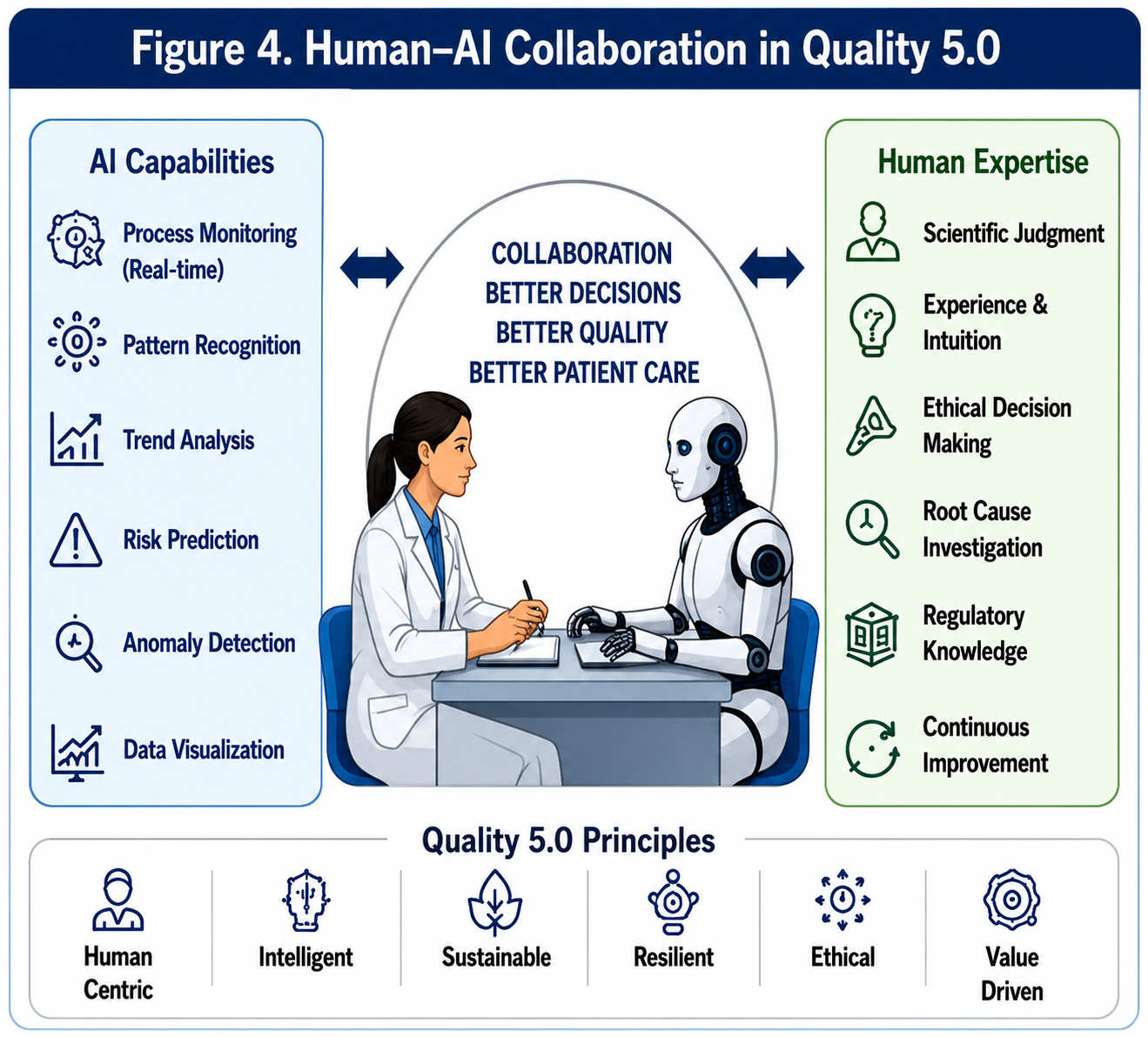
Unlike Quality 4.0, which primarily emphasizes technological advancement, Quality 5.0 introduces a human-centered approach where digital technologies work alongside people rather than replacing them. The objective is to create pharmaceutical quality systems that are intelligent, sustainable, resilient, and capable of supporting better scientific decision-making.
Although Quality 5.0 is still evolving, many pharmaceutical companies have already begun adopting its underlying principles by combining Artificial Intelligence (AI), advanced analytics, sustainability initiatives, and employee empowerment into their quality strategies.
Rather than asking,
“How can technology replace quality professionals?”
Quality 5.0 asks,
“How can technology help quality professionals make better decisions?”
This shift recognizes that pharmaceutical quality ultimately depends on scientific judgment, ethical responsibility, and regulatory accountability, these are the areas where human expertise remains indispensable.
i) Human-Centred Quality Management
Artificial Intelligence can analyze millions of manufacturing records within minutes, but it cannot fully replace the experience of a Quality Assurance professional investigating a complex deviation or evaluating patient safety risks.
Quality 5.0 therefore emphasizes collaboration between humans and intelligent systems.
In this model:
- AI identifies patterns.
- Machine Learning predicts risks.
- Digital systems collect data.
- QA professionals interpret the findings.
- Management makes strategic decisions.
Technology becomes a decision-support tool rather than an independent decision-maker.
Benefit:
* Better scientific judgement
* Improved risk assessment
* Faster investigations
* Reduced manual workload
* Higher employee engagement
ii) Sustainable Pharmaceutical Manufacturing
Sustainability is becoming an essential component of pharmaceutical quality. Traditionally, quality programs focused primarily on regulatory compliance and product quality. Today, organizations are also expected to reduce environmental impact while maintaining manufacturing excellence. Quality 5.0 integrates sustainability into quality management by encouraging:
- Reduced energy consmption
- Water conservation
- Efficient resource utilization
- Waste minimization
- Green manufacturing technologies
- Sustainable packaging initiatives
Digital monitoring systems help organizations measure environmental performance alongside traditional quality indicators.
Practical Example:
An AI-powered energy monitoring system identifies excessive electricity consumption during tablet coating operations. Process engineers optimize equipment settings based on these insights, reducing energy use without affecting product quality.
This demonstrates how digital technologies can simultaneously improve operational efficiency and environmental sustainability.
iii) Ethical Artificial Intelligence
As AI becomes increasingly integrated into pharmaceutical operations, ethical governance becomes equally important.
Quality 5.0 promotes responsible AI by ensuring that automated systems remain:
- Transparent
- Explainable
- Fair
- Secure
- Scientifically justified
Quality professionals must always understand how an AI system reached its conclusions before relying on its recommendations.
Human oversight remains essential for all GMP-critical decisions.
iv) Organizational Resilience
Recent global events have demonstrated that pharmaceutical supply chains can be disrupted by pandemics, geopolitical conflicts, natural disasters, and raw material shortages. Quality 5.0 encourages organizations to build resilient quality systems capable of responding rapidly to unexpected events.
Digital technologies support resilience by enabling:
- Remote quality oversight
- Electronic batch review
- Cloud-based collaboration
- Predictive supply chain monitoring
- Digital audits
- Real-time manufacturing visibility
Organizations with mature digital quality systems are generally better prepared to maintain operations during unexpected disruptions.
Practical Case Study 1
Digital Environmental Monitoring
A sterile manufacturing facility replaced manual environmental monitoring records with wireless IoT sensors connected to an electronic Quality Management System. Instead of reviewing environmental data at the end of each shift, QA personnel received immediate notifications whenever temperature, humidity, or differential pressure approached alert limits.
Over twelve months:
- Environmental excursions decreased significantly.
- Investigation time was reduced.
- Regulatory inspections became more efficient due to instant access to historical records.
The project demonstrated how continuous monitoring supports proactive quality assurance.
Practical Case Study 2
AI-Assisted Deviation Management
A pharmaceutical company manufacturing injectable products experienced repeated deviations related to filling volume variability.Traditionally, investigations required QA personnel to manually review hundreds of batch records and equipment logs.
After implementing an AI-assisted deviation management platform, historical manufacturing data were analyzed automatically. The system identified a subtle correlation between filling volume variability and periodic pressure fluctuations in compressed air supply. Engineering corrected the pressure regulation system before additional deviations occurred.
Outcome:
- 35% reduction in deviation investigations
- Faster root cause identification
- Improved batch release timelines
- Reduced production downtime
Future Outlook for Pharmaceutical Quality Assurance
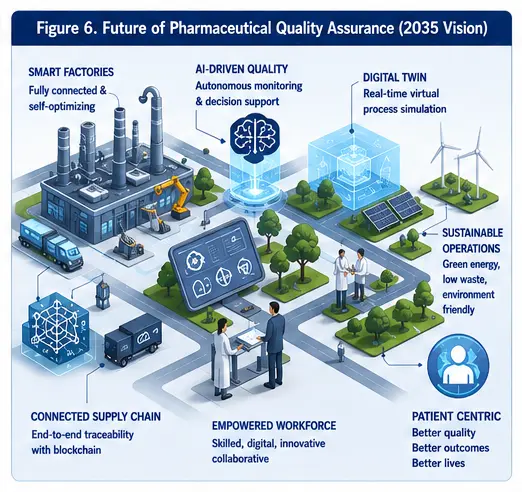
The future of pharmaceutical quality assurance will likely involve deeper integration of digital technologies, advanced analytics, and human expertise. Organizations will increasingly rely on predictive models to anticipate quality risks and optimize manufacturing processes.
Regulatory agencies are also encouraging the adoption of innovative technologies that improve product quality and patient safety. Collaborative initiatives between industry and regulators are expected to accelerate digital transformation across the pharmaceutical sector.
As Quality 5.0 concepts continue to evolve, pharmaceutical companies must adopt flexible strategies that support innovation while maintaining strong regulatory compliance. Organizations that successfully balance technology, human expertise, and sustainability will be better positioned to thrive in an increasingly complex healthcare environment.
Conclusion
The pharmaceutical industry is entering a new era in which quality is increasingly driven by digital intelligence, real-time data, and collaborative decision-making. The transition from traditional quality systems to Quality 4.0 has enabled organizations to improve efficiency, strengthen data integrity, and move from reactive quality control toward predictive quality management. Technologies such as Artificial Intelligence, Machine Learning, the Industrial Internet of Things, cloud computing, electronic Quality Management Systems, and Digital Twins are transforming how quality information is collected, analyzed, and applied across the pharmaceutical lifecycle.
However, technology alone is not sufficient to achieve sustainable quality excellence. The emerging concept of Quality 5.0 expands the vision of digital transformation by emphasizing human expertise, ethical governance, environmental sustainability, and organizational resilience. In this evolving model, intelligent technologies enhance rather than replace professional judgment, enabling quality teams to focus on strategic oversight, continuous improvement, and patient-centered decision-making.
As pharmaceutical manufacturing becomes more complex and interconnected, organizations must adopt a balanced approach that combines innovation with regulatory compliance, robust data integrity practices, and workforce development. Companies that invest in both advanced technologies and people will be better equipped to manage future challenges, maintain inspection readiness, and deliver safe, effective, and high-quality medicines.
Ultimately, the journey from Quality 4.0 to Quality 5.0 represents more than a technological upgrade, it reflects a fundamental transformation in the philosophy of pharmaceutical quality. By embracing digital innovation while preserving scientific rigor and ethical responsibility, the pharmaceutical industry can build resilient quality systems that support operational excellence and, most importantly, protect patient health.
References:
- European Commission (2021) Industry 5.0: Towards a Sustainable, Human-Centric and Resilient European Industry. Luxembourg: Publications Office of the European Union.
- American Society for Quality (ASQ) (2021) Quality 4.0. Milwaukee, WI: ASQ.
- European Medicines Agency (EMA) (2011) EU Guidelines for Good Manufacturing Practice Annex 11: Computerised Systems. Amsterdam: EMA.
- Food and Drug Administration (FDA) (2023) Artificial Intelligence and Machine Learning Discussion Paper. Silver Spring, MD: U.S. FDA.
- PIC/S (2021) PI 041-1 Good Practices for Data Management and Integrity in Regulated GMP/GDP Environments. Geneva: Pharmaceutical Inspection Co-operation Scheme.
- World Health Organization (WHO) (2014) WHO Good Manufacturing Practices for Pharmaceutical Products: Main Principles. Geneva: WHO
- Xu, X., Lu, Y., Vogel-Heuser, B. and Wang, L. (2021) ‘Industry 4.0 and Industry 5.0—Inception, conception and perception’, Journal of Manufacturing Systems, 61, pp. 530–535.
- McKinsey & Company (2023) Digital Transformation in Pharmaceutical Manufacturing.
- International Council for Harmonisation (ICH) (2023) ICH Q9(R1): Quality Risk Management. Geneva: ICH.