
Master Pharmaceutical Industry Audits
About Course
This course will provide you with all the tools that you will need to become a professional pharma industry audit leader.
If you would consider the prestigious highly successful career of auditing either within your organization, if you are willing to start your career with, or if you want to consider the career of auditing for your own business, like most of the pharma industry professionals do these days to fulfill the modern business model requirements of outsourcing, as the cat as external audit leaders, so in all cases, you are in the right place to kick off your successful career in the pharma industry as an audit leader.
What will you learn?
-
Introduction
-
Audit
-
What is an Audit
-
Quality Audit
-
Audit Principles
-
Audit Checklist
-
Conducting and Audit
-
Non-Conformities
-
ICH
-
CAPA
-
Risk Assessment
Auditing is an evaluation of a person, organization, system, process, enterprise, project, or product
Could be, financial, project management, quality management (Compliance), vigilance (Safety), regulatory, investigation, and finally trend analysis. focusing on the quality management audit, the kind of audit of great concern to most health authorities all over the world, followed by recently by the vigilance audit.
In this course we will cover everything about auditing, starting from the definition and why we do need auditing, different types of audits, such as first Party (Internal), second Party (Supplier), Third Party (External), and then who should participate in the audits? only auditors? or auditors and some professionals? who would be responsible for managing the audit, leading the audit, and finally closing the audit and writing the audit report? we will answer all these questions together along with our course.
Then we will explore together, what are the most common objectives of auditing. how to set these objectives and what is the set scope of such an audit? how to plan for an audit? how to manage an audit? to set an audit program and perform it? what are audit principles and approaches, prepare an audit checklist, how an audit workflow look like, and finally how to conduct an audit?
After auditing, do we have 2 probabilities of such an audit? if complied or not? what if nonconformities are reported as audit findings? how do manage these nonconformities? and how this is related to the ISO, and ICH Q10 Pharmaceutical Quality System (PQS)
From here it comes to the CAPA, the topic that has been mentioned in most of the pharma industry courses, we will go deeper into the CAPA, starting with why we need CAPA and when. Who should raise the CAPA? the CAPA phases, monitoring, and CAPA SOPs till coming up with the final CAPA report.
We will focus on common confusing terms of CAPA
we will differentiate between correction, corrective action, and preventive actions in the pharma industry
and will close the topic of CAPA by the automated CAPA through the CAPA software.
Why This Course?
-
Learn directly from industry-experienced professionals
-
Gain practical knowledge backed by case studies and audit scenarios
-
Build confidence to face regulatory authority inspections
-
Improve your organization’s QMS, GMP compliance, and readiness
-
Enhance your professional credibility as a qualified auditor
Course Outcomes
By the end of this course, you will:
Understand the audit life cycle — from planning to closure
Be able to lead and participate in audits confidently
Know how to manage findings, deviations, and CAPAs
Strengthen your compliance culture and audit readiness
Advance your career in pharmaceutical quality and regulatory affairs
Let’s Get Started
Join us and master the art of pharmaceutical audits — a skill that every professional in the industry must have to ensure excellence, compliance, and trust.
Let’s take your auditing skills — and your career — to the next level!
The most important part of this course is the part titled
“What makes a good auditor?
In other words, what qualifies you to become an audit leader? how to become a professional audit leader?
To kick off your career
So let us start our journey toward auditing, my dear future audit leaders.
Course Content
Module 1: Introduction to audit
-
Introduction to audit
03:49
Module 2: What is an Audit?
Module 3: The Quality Audit
Module 4: The Audit Principles
Module 5: The Audit Checklist
Module 6: Conducting an Audit
Module 7: Handling Nonconformities
Module 8: ICH Q10
Module 9: CAPA
Module 10: Risk Assessment
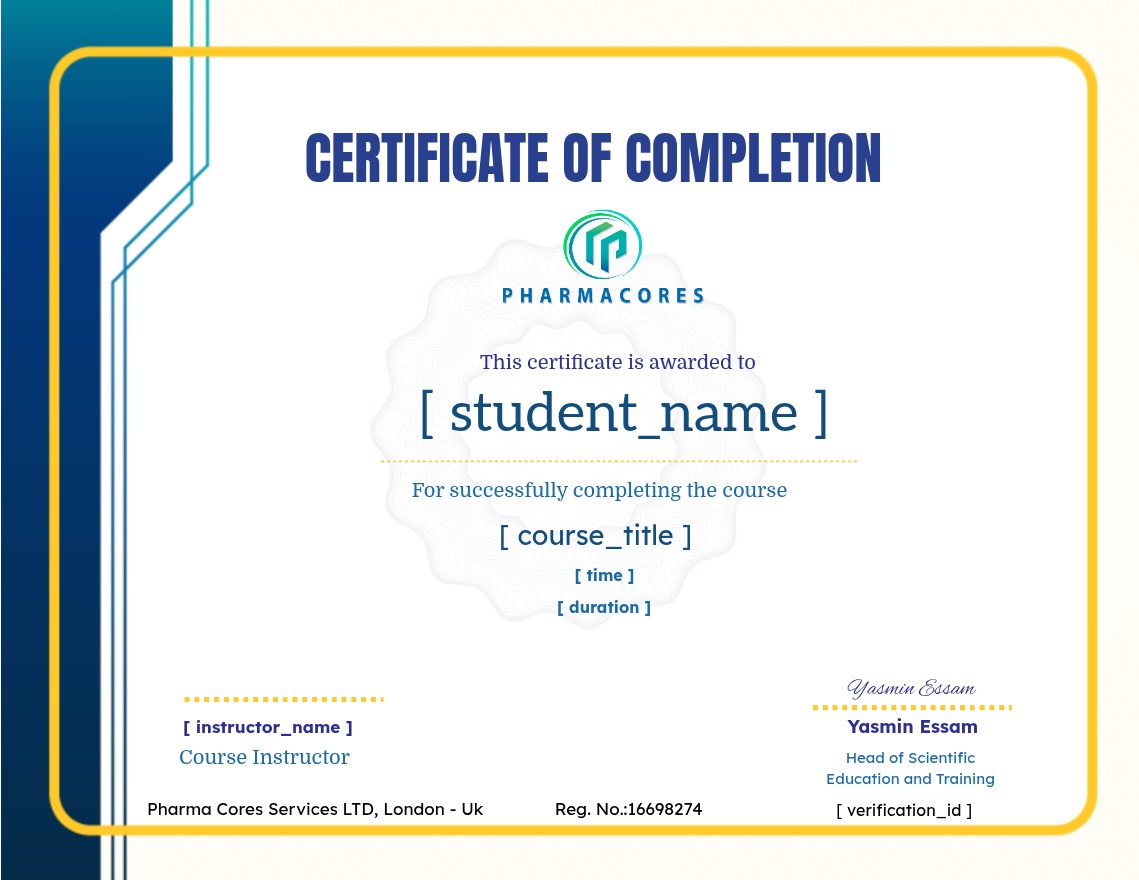
Earn a certificate
Add this certificate to your resume to demonstrate your skills & increase your chances of getting noticed.
Student Ratings & Reviews